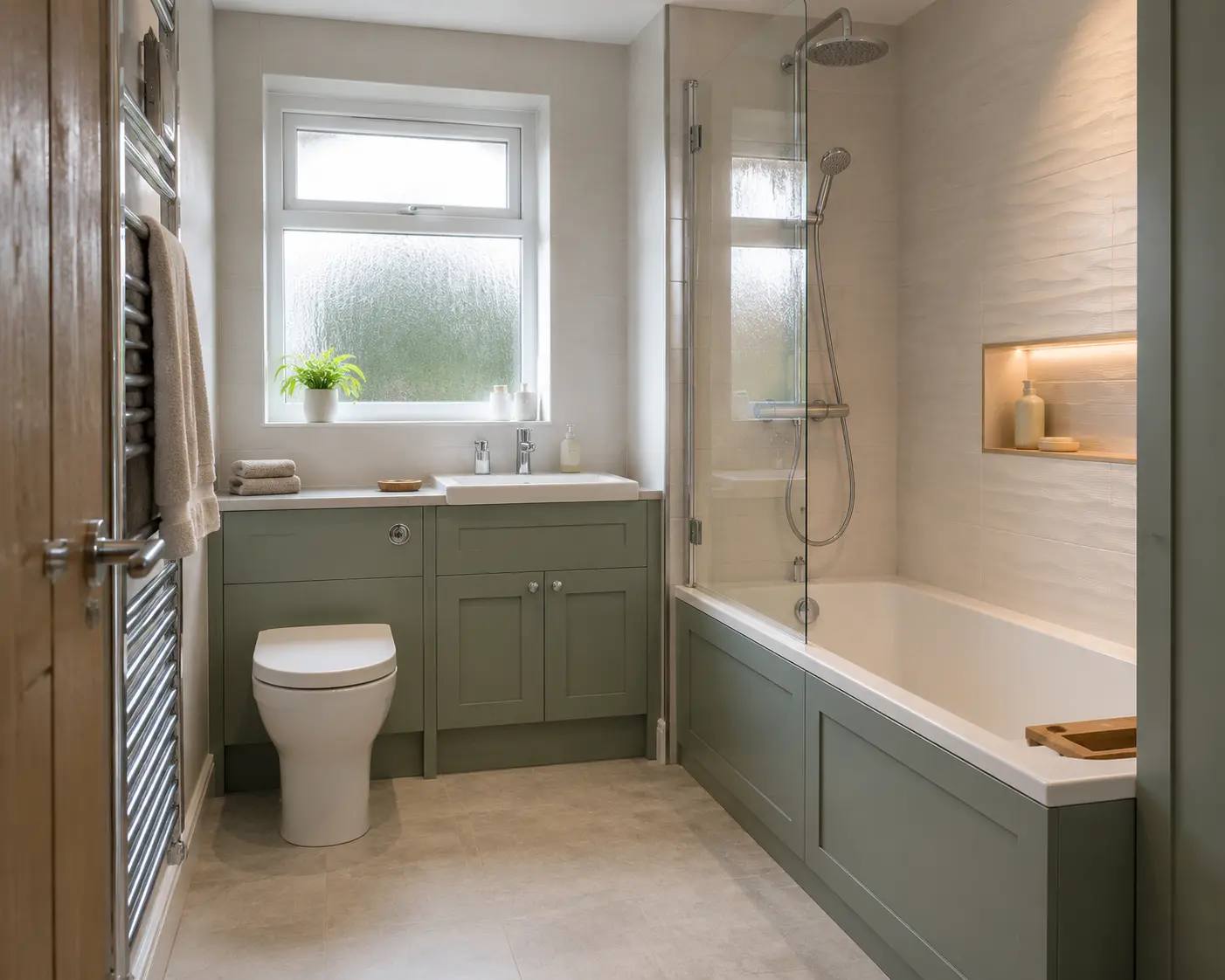
Start with the room and the work
A bathroom quote should say which room is being changed and what the fitter will do there. “New bathroom” is too broad on its own. Replacing a suite, changing a bath to a shower and rebuilding a wet room involve different products and preparation. The written description should match the plan you discussed at the visit.
Check that the address and contact details are right, then look for a clear list of work. If something matters to you, such as keeping an existing towel rail or moving the basin, make sure it is recorded. A conversation is helpful, but the written quote is the document you will both return to later.
Name the bathroom products
The quote should identify the main products clearly enough that you know what you are buying. That may mean a manufacturer and model, or an agreed product list attached to the quote. “White toilet” or “standard shower” can cover a wide range of sizes, controls and prices.
Check the smaller parts too. A bath may need a panel, drain fitting and taps. A basin cabinet may be sold with or without its basin. A shower screen needs the correct fittings for the chosen tray. If you are supplying any products yourself, record which ones and agree when they must be on site for checking and installation.
Include removal and preparation
Find out who removes the old fittings, strips the wall finish and takes the waste away. Then check what happens to the walls and floor before the new products go in. Preparation may include replacing unsuitable boards, repairing plaster or making the floor ready for the chosen covering.
Some hidden repairs cannot be priced exactly before the old bathroom is removed. The quote should distinguish work already included from problems that would need another price. Ask how those problems will be photographed or shown to you, and how you will approve extra work. You should not have to guess whether a vague “making good” line covers a damaged shower wall.
Spell out plumbing and electrical work
Look for the agreed changes to water pipes, wastes and shower connections. If a toilet or basin is moving, that should be reflected in the work list. Check whether concealed valves will have access for maintenance and whether old pipes are being removed, kept or replaced.
Electrical work should be identified rather than hidden within “installation”. Lights, fans, electric showers, illuminated mirrors and heated floors have different fitting requirements. A suitable electrician should assess the work and confirm what testing and paperwork are needed. Do not assume that a new mirror or shower can simply use the existing electrical connection without being checked.
Describe walls, floors and finishing
The quote should say which walls are tiled or panelled and what floor finish is included. If only the shower walls are covered, the rest of the room still needs an agreed finish. Check trims, skirting, painting and any covers built around pipes, because these details affect how complete the room will look.
Waterproofing should match the shower or wet room system being fitted. Ask what is included behind the visible finish, not only which tiles you will see. Product instructions determine how boards, membranes, joints and drains work together. Grout alone should not be treated as the whole waterproofing plan for a shower.
Agree access, timing and facilities
Ask for the expected start and duration, while recognising that a hidden repair or a late product can change the plan. Find out who will tell you about delays. If the house has one bathroom, agree when the toilet, basin and shower will be unavailable and what temporary arrangements you will need.
The quote or accompanying plan should also cover access. For a flat, explain shared stairs, parking restrictions and any building arrangements that affect deliveries. Agree where products and tools can be stored. This avoids a situation where a bath arrives before anyone has checked whether it can be carried through the entrance.
Check the total and the next steps
Read the total, payment stages and any deposit terms carefully. Ask whether VAT is included where applicable. Identify provisional sums: these are allowances that may change when the exact work or product is known. If an allowance seems low, ask what it is expected to cover before accepting the quote.
Finally, check how changes will be agreed and what happens after fitting. Ask about product instructions, testing, any stated warranty and who to contact about a problem. Keep the accepted quote, product list and later changes together. A clear record makes the work easier to follow and gives you something specific to discuss if the finished room differs from what was agreed.
Check how long the quote remains valid. If you are not ready to begin within that period, ask for the products and price to be confirmed again before paying or placing orders. Keep any updated version clearly dated so it cannot be confused with the earlier one.
For help with the work described here, see our bathroom costs and quotes in Glasgow.
What to remember
Keep the agreed work and products in writing before fitting starts.Bathroom fitters Glasgow
Get a quote for your Glasgow bathroom
Tell us what needs changing and add your postcode. We will contact you about the work.