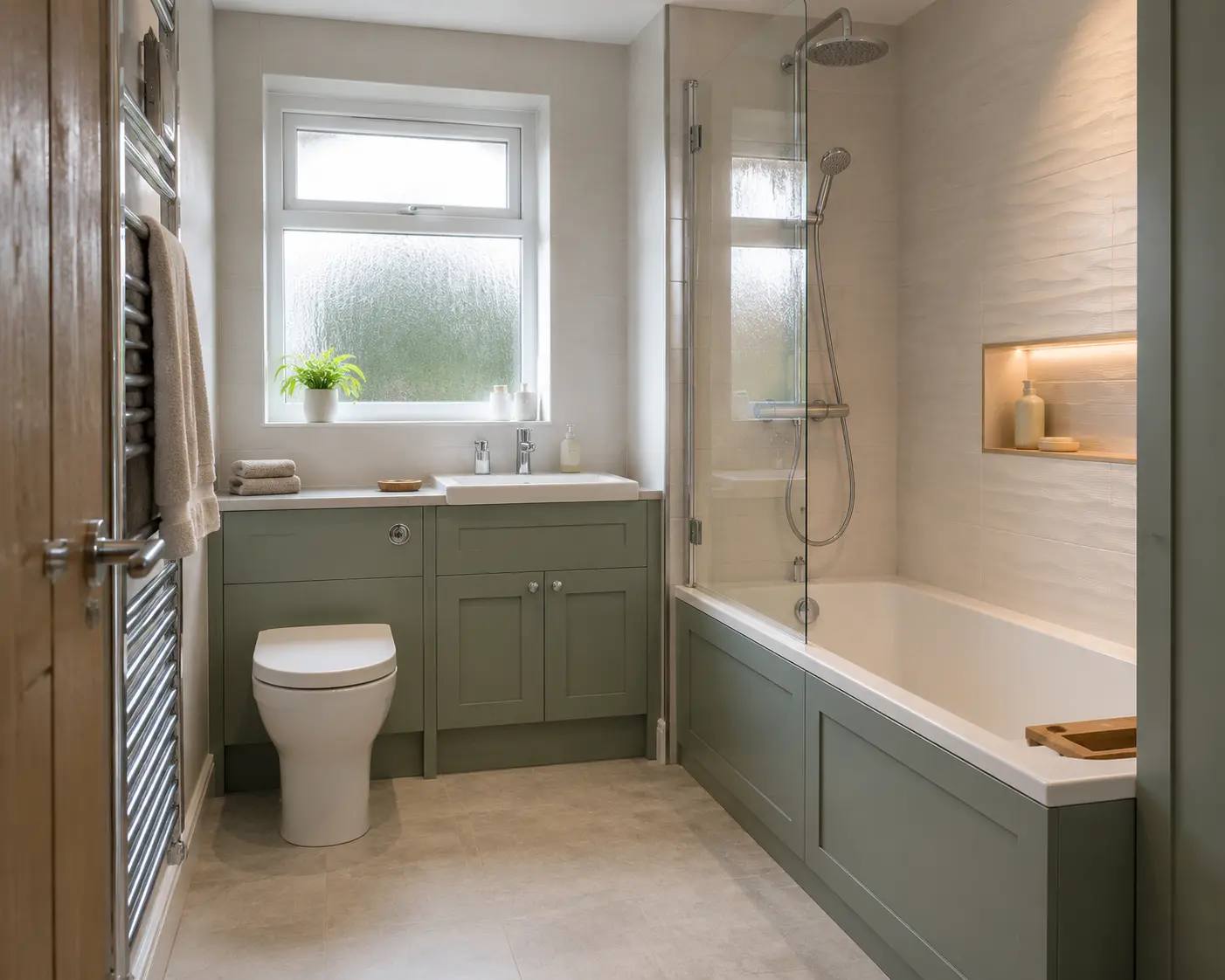
Position the rail for a particular task
A grab rail should help with a specific movement, such as getting up from the toilet, entering the shower or standing from a shower seat. There is no single height or position that suits every person and room. Copying the position from a photograph may put the support beyond reach or on the wrong side for the user.
Start by describing where help is needed. If balance, mobility or a health condition affects the movement, seek an occupational therapy assessment or other appropriate professional advice. The person using the rail should be involved in the decision. Their reach, strength and routine matter more than making the rail line up with nearby decorative fittings.
Look at the whole movement
Using a bathroom involves moving towards a fitting, turning, sitting or standing, and moving away again. A rail that is helpful at one point may be difficult to reach at another. Review the complete movement in the room rather than judging a rail from the doorway.
Any assessment should also account for a walking aid, wheelchair or assistance where relevant. Do not remove needed clear space simply to fit another rail. The aim is a workable arrangement of support and movement. A professional can help identify which type and position are appropriate without asking the user to try an unsafe manoeuvre as a test.
Check support beside the toilet
Toilet support depends on how the person sits down, stands up or moves from a wheelchair. A fixed wall rail and a folding rail provide different arrangements and need different fixing conditions. The toilet’s position relative to the wall also matters. An attractive rail beside the wrong part of the toilet may offer little useful help.
Discuss the toilet height, surrounding space and any assistance together. Avoid changing one of those details after the rail position has been agreed without reviewing the effect. Record the chosen product and location clearly for the fitter. Small differences in a room can matter when the support is being used every day.
Check support in the shower
The shower entrance, seat and controls should be planned alongside any rails. A user needs to reach support without leaning across the spray or around a screen. Storage should not occupy the same space as the handhold. Think about how the person enters, washes and leaves, including where the towel will be.
A rail fixed to glass or a decorative panel is not automatically suitable. The chosen product must be designed for its purpose and installed according to its instructions. If the wall is being rebuilt, agree the supporting construction before waterproofing and finishes are applied. Adding support later can be more involved once the room is complete.
Confirm the wall and fixings
The wall needs to support the intended rail and loads. Tiles or panels are finishes; what lies behind them is important. A fitter should establish whether the wall is brick or stone, a suitably supported framed wall or another construction, then use the fixing method required for the rail and wall.
Do not treat suction accessories or a towel bar as a substitute for assessed, securely installed support. If a rail feels loose or its fixings move, stop relying on it and arrange a check. Tightening a visible screw without understanding the wall condition may not resolve the problem. Keep the product information available for the person inspecting it.
Choose a grip and finish the user can manage
The shape, size and surface of the rail affect how it feels in the hand. Compare suitable products with the user where possible. Consider whether it remains easy to identify against the wall and whether hands can close around it comfortably. Appearance matters, but the rail’s support function must remain the priority.
Coordinate the finish with the room after those needs are settled. A contrasting colour may help visibility, while another person may prefer a coordinated metal finish. Ask about cleaning and any maintenance checks the manufacturer requires. Avoid covering a rail with decorative wrapping or accessories that alter its grip or conceal damage.
Review the finished arrangement
Before the work is treated as complete, check that the installed rail matches the agreed type and position. Have the fitter explain any operating features and provide the instructions. If an occupational therapist or other professional specified the arrangement, follow their advice about reviewing the completed adaptation.
Needs can change, so a rail that once worked well may need reassessment later. Do not simply add more rails to fill gaps without considering how they affect movement. The safest useful arrangement is planned around the person, securely fitted to a suitable structure and kept in sound condition through the checks appropriate to that equipment.
Tell the fitter about any concealed pipes or cables known to be in the proposed fixing area. They still need to carry out the appropriate checks before drilling. Keep photographs of the supporting wall construction if it is newly built. Those records can be useful for future work, but they do not replace checking the actual fixing position safely.
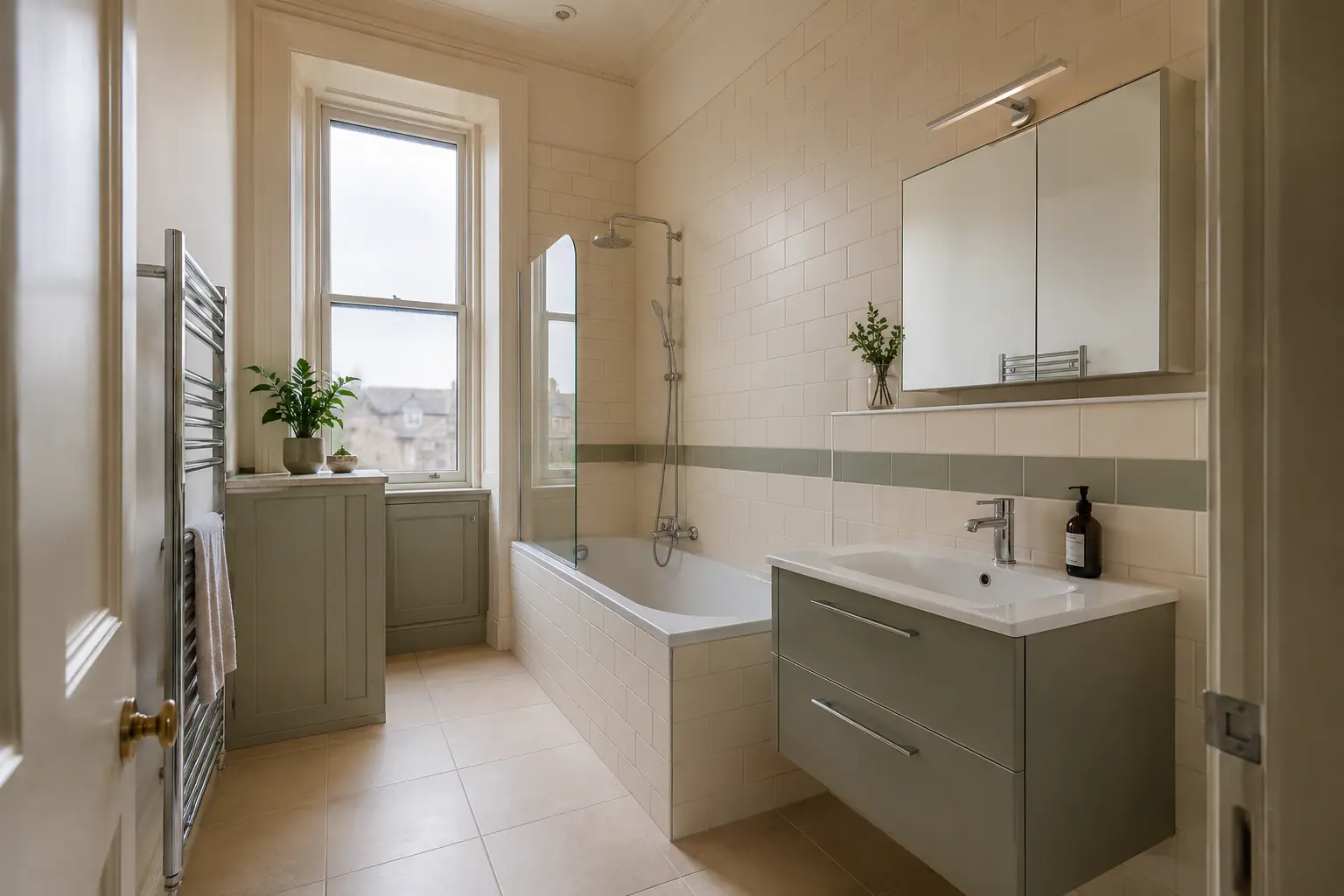
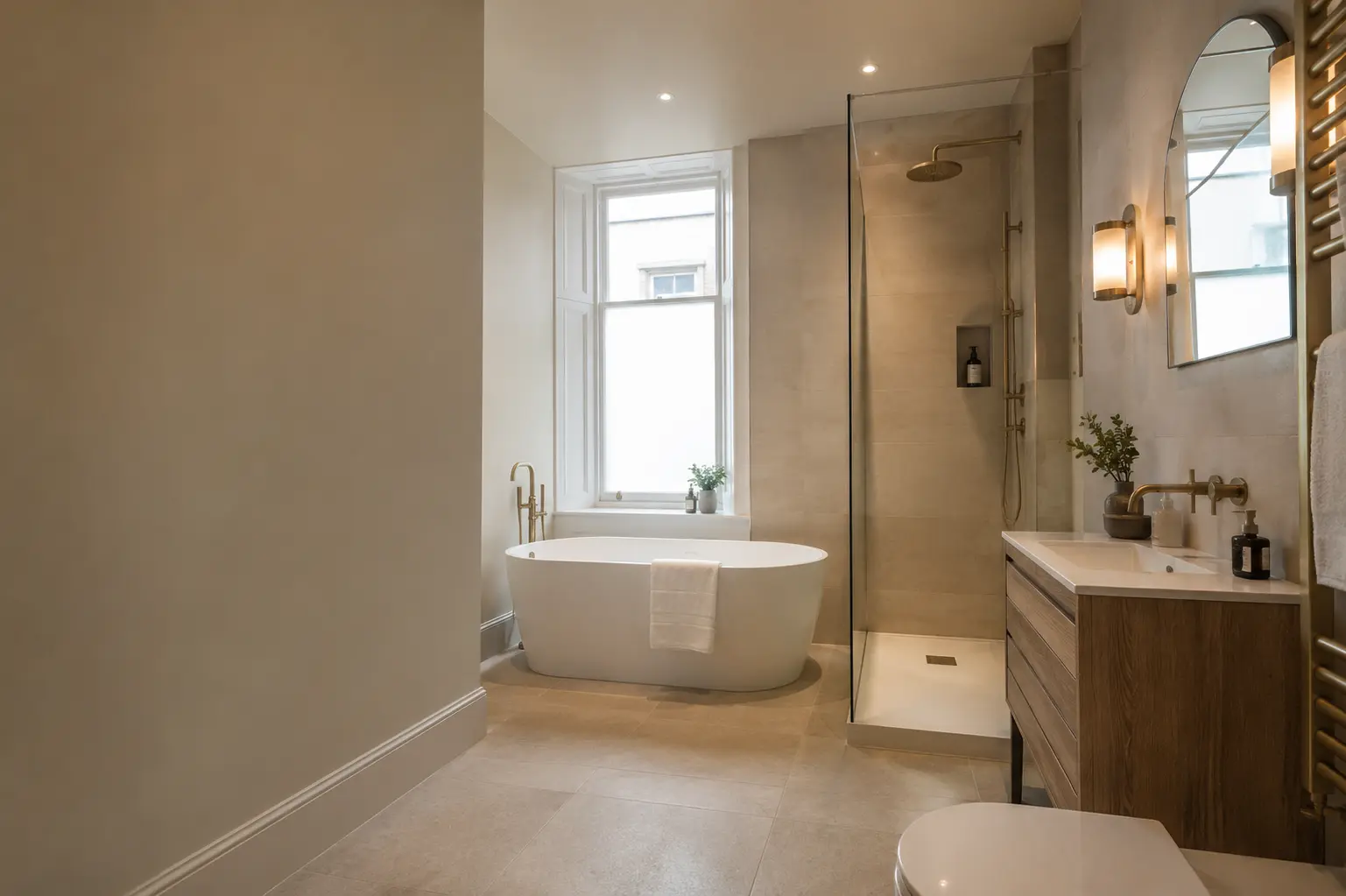
For help with the work described here, see our accessible bathroom fitting in Glasgow.
What to remember
Get individual advice on the position and have the rail fixed to a suitable structure.Further guidance
Bathroom fitters Glasgow
Get a quote for your Glasgow bathroom
Tell us what needs changing and add your postcode. We will contact you about the work.