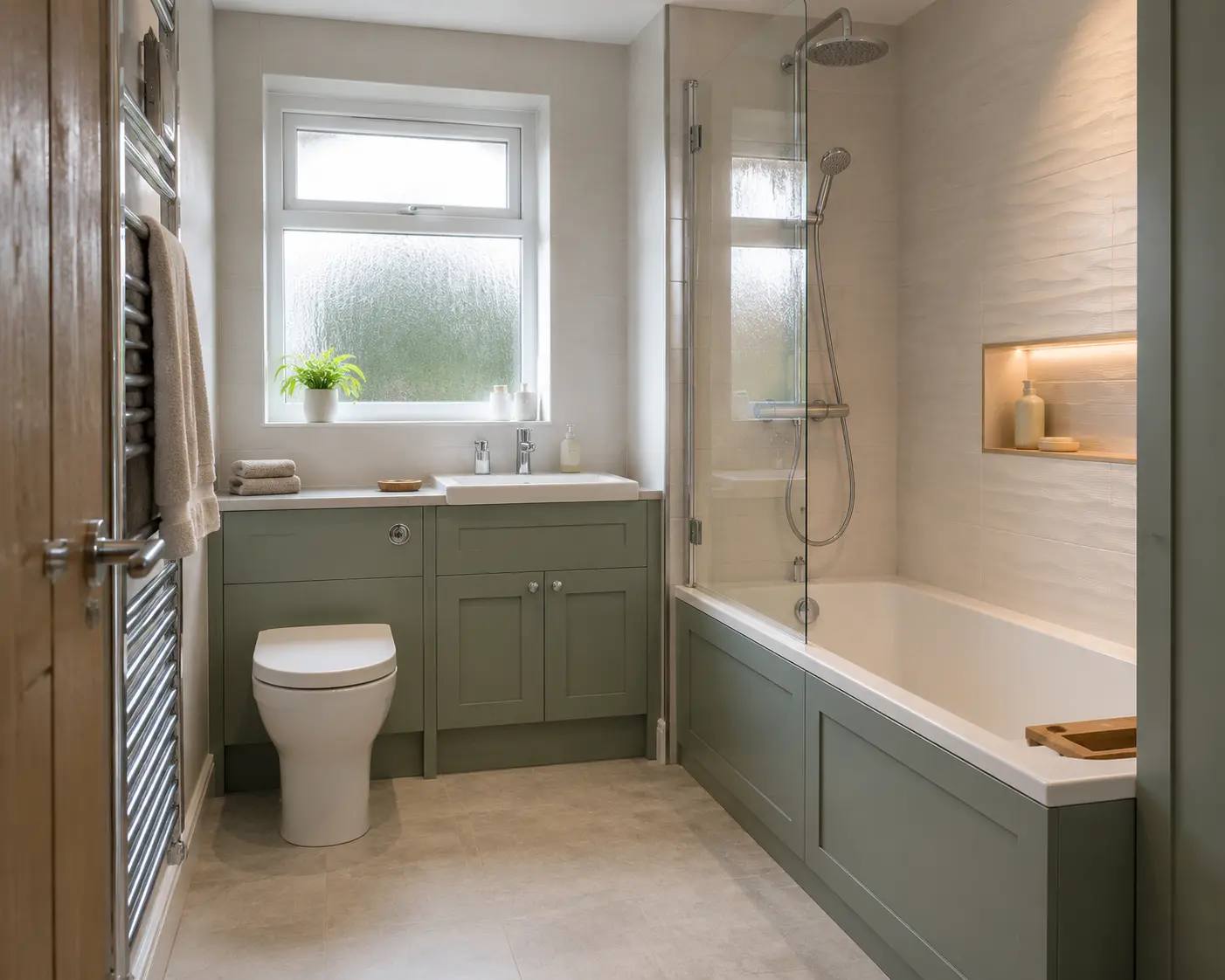
Look for changes, not only running water
A bathroom leak is not always a visible puddle. Staining on a ceiling, swollen cabinet edges, loose flooring or a persistent damp smell can be clues. They do not prove a particular cause, because condensation and other building moisture can look similar. What matters is noticing a change and having it checked before more damage develops.
Record where the mark appears and when you notice it. Does it follow a shower, flushing the toilet or filling the basin? Photographs taken over time can help explain the pattern. Avoid covering the area with new paint or sealant before the source has been assessed.
Staining below or beside the bathroom
A damp patch on the ceiling below may suggest water escaping from somewhere above, but its position does not always identify the faulty fitting. Water can travel along materials before it becomes visible. The leak might involve a pipe, drain fitting, seal or another source rather than the shower directly over the mark.
Arrange an appropriate inspection and tell the person assessing it about recent work or product changes. If you live in a flat, report damage affecting another home to the affected neighbour and the landlord or building manager where relevant. Do not keep using a suspected leaking fitting while waiting for the stain to become large enough to be obvious.
Soft floors or loose finishes
Flooring that feels different underfoot, tiles that become loose or a bath panel that swells can indicate moisture damage, among other causes. The material underneath may need inspection. A fresh surface covering does not restore a damaged floor or stop water reaching it.
Avoid pressing or lifting damaged finishes to investigate if that could worsen the problem or expose hazards. Describe what changed during normal use and have the area assessed. If repair requires opening the floor or wall, ask how damaged materials and the bathroom’s waterproofing will be dealt with, not only how the visible surface will be patched.
Water appearing around a fitting
Water beside a toilet, beneath a basin or around a shower tray needs its source identified. It may come from a connection, drain fitting, seal, splash or condensation on a surface. Drying it repeatedly without checking the cause can allow a small fault to continue unnoticed.
Note whether it appears while the fitting is used or when it has been idle. Do not tighten unfamiliar connections or dismantle equipment as a general test. A suitable professional can check the relevant parts safely. If a shut-off control you already know how to use can be operated safely, follow appropriate guidance; otherwise ask for help rather than guessing which valve to turn.
Damp smells and recurring marks
A musty smell or recurring dark mark can suggest that an area remains damp, but it does not identify the source by itself. The problem may involve ventilation, a leak or moisture within the building. An inspection should consider those possibilities rather than treating every mark as a simple cleaning issue.
Keep track of whether the problem changes after showering, rainfall or periods when the bathroom is unused. Follow appropriate guidance for mould and do not mix cleaning chemicals. Extensive or recurring mould and damaged materials need proper assessment. Replacing silicone or repainting may hide the symptom while the underlying source continues.
Treat electrical contact and active flooding urgently
Water near electrical equipment needs particular care. Stop using affected equipment and do not touch wet electrical fittings or open their covers. Seek appropriate professional help. If anyone is in immediate danger, call 999 rather than waiting for a bathroom quote.
For an active leak, limit further water use where you can do so safely and protect people from the affected area. Do not climb onto unstable wet surfaces or enter a space with unsafe electrical conditions to retrieve belongings. Tell the professional what is happening and which parts of the home are affected so the response matches the situation.
Make sure the repair includes the cause
Ask the person repairing the leak to explain what failed and what work is needed. The quote should distinguish stopping the leak from repairing damaged boards, plaster, furniture or decoration. Drying and further checks may be necessary before finishes are replaced, depending on the extent of the damage.
Keep photographs and records of the repair. After the agreed work, monitor the affected area during normal use and report any renewed signs. A successful repair addresses the source and the damage it caused; a new bead of sealant or a coat of paint is only enough when the assessment shows that it is the appropriate remedy.
If you need to move stored items away from damp, do so only where the area is safe. Keep damaged items and photographs available if an insurer, landlord or repairer asks for evidence. Record dates and who has inspected the problem. Those practical notes can help coordinate repairs without requiring you to diagnose the source yourself or disturb unsafe materials.
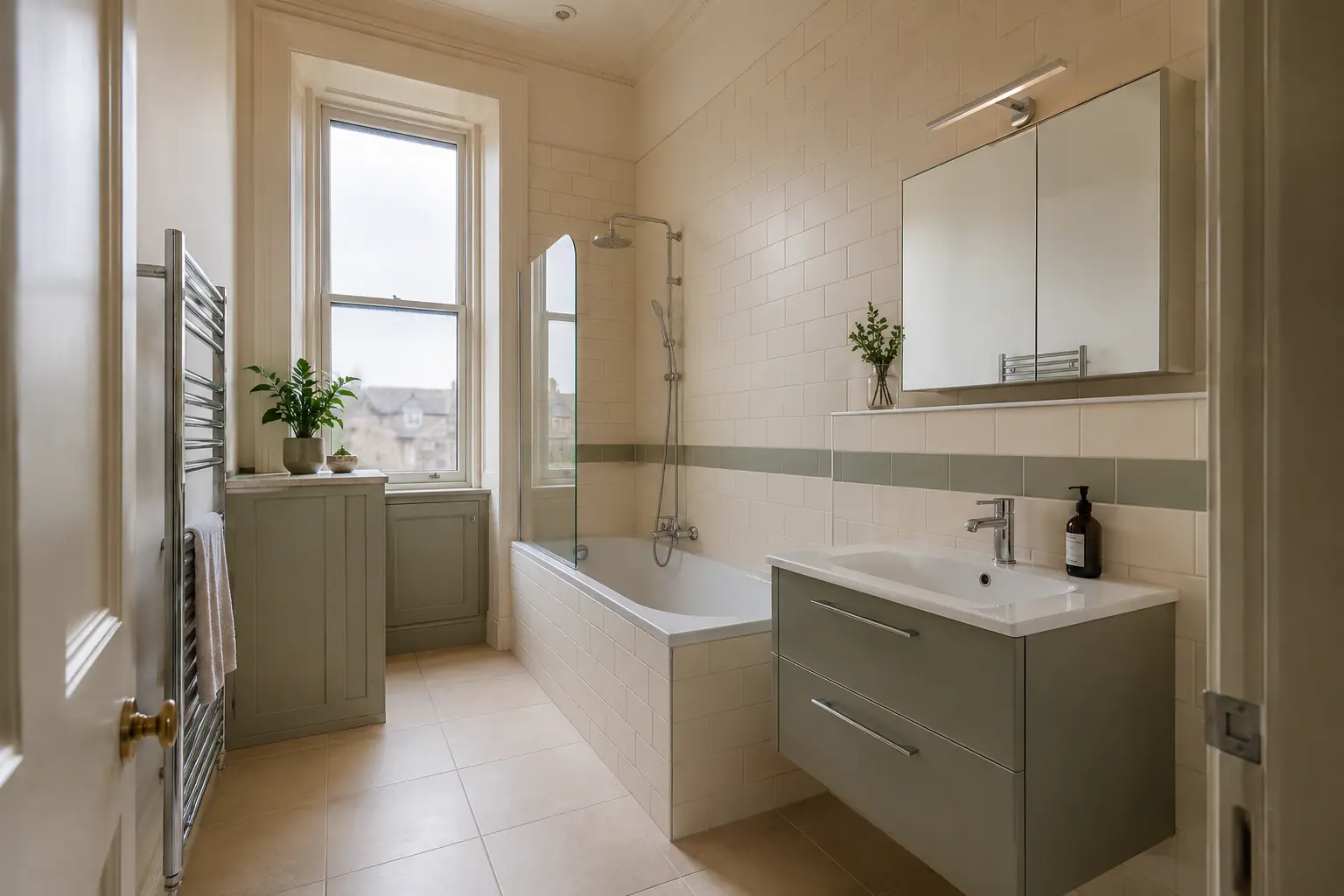

For help with the work described here, see our bathroom plumbing in Glasgow.
What to remember
Find the water source and repair any damage before replacing the visible finish.Further guidance
Bathroom fitters Glasgow
Get a quote for your Glasgow bathroom
Tell us what needs changing and add your postcode. We will contact you about the work.