
Regrouting deals with the joints between tiles
Replacing grout can improve a tiled surface where the grout itself has worn or failed and the tiles and base remain sound. It is not a general cure for leaks, moving floors or damaged walls. Before agreeing to regrouting, have the condition of the surrounding tiled area checked.
Describe the problem clearly: discolouration, small gaps, crumbling material or repeated cracks are different symptoms. Note whether there are loose tiles, damp smells or marks on the other side of the wall. Those details help distinguish a surface maintenance job from a repair that needs to go further beneath the finish.
Check whether the tiles are secure
Regrouting over tiles that move is unlikely to solve the underlying problem. The fitter needs to assess whether the tiles and supporting surface are stable. Movement may involve the fixing or the structure underneath, and the remedy depends on what is found.
Do not pull at loose tiles or force a tool into the joints to test them. That can damage edges or the waterproofing behind the finish. Ask for an inspection and a clear explanation of the proposed work. If tiles need lifting, the quote should explain how the base and waterproofing will be restored before the new surface is completed.
Separate grout from flexible seals
Grout between tiles and flexible sealant at certain junctions perform different jobs. A failed seal beside a bath or tray is not necessarily a grout problem. Corners and changes between materials need the detail specified for the installation rather than the same rigid material applied everywhere.
Ask the fitter which joints need which treatment. Do not cover cracked grout with silicone simply to hide it, or scrape out a sound flexible joint because it looks different from the grout. A correct repair respects the movement and water-management details of the shower or bath system, not just the appearance of an uninterrupted line.
Investigate leaks before refreshing the surface
If water is escaping into a wall, floor or room below, find the source before deciding that regrouting is enough. The leak may come from a pipe, drain fitting, tray junction or another opening. New grout will not repair a concealed plumbing fault or damaged waterproofing.
Ask whether the inspection found a specific cause and how the proposed work addresses it. If more investigation is needed after opening the area, agree how findings and extra costs will be discussed. Avoid paying for repeated cosmetic repairs when the same damp patch keeps returning. The surface should be finished after the necessary underlying repairs, not used to hide uncertainty about them.
Understand what a regrouting job includes
A proper quote should identify the area being treated, how the old grout will be removed and which replacement product will be used. The joints need preparation suited to that product. The fitter should also explain how tile edges, nearby fittings and any waterproofing will be protected during removal.
Check whether the quote includes related sealant work or only the grout. Ask about dust, access and the time the shower will be out of use. A small area may still need a waiting period before it can get wet. Agree those practical details before the work starts, especially in a home with one bathroom.
Choose the colour and care requirements
New grout may differ from the old material even if the colour name seems similar. Compare an appropriate sample and discuss whether a small local repair will remain visible. Sometimes a broader area is worth treating for a consistent finish, but the reason should be explained rather than assumed.
Ask which cleaners suit the grout and tiles. Natural stone and some decorative finishes need particular care, so do not choose a cleaning product solely because it is marketed for bathrooms. Keep the replacement grout details with your records. That makes future maintenance easier and helps identify what was applied if another problem appears.
Know when a larger repair is justified
If tiles are loose, the floor moves or water has damaged the base, a larger repair may be necessary. Ask to see the evidence and have the proposed work explained. The work should relate to the condition found, rather than automatically turning every grout issue into a complete bathroom replacement.
After repair, follow the stated drying and hardening time and maintenance instructions. Take a photograph of the finished area and watch for changes during ordinary cleaning. Regrouting is enough when the joints are the real problem and the surrounding installation is sound. Where the cause lies deeper, dealing with it first is what prevents the same repair being needed again.
If you have spare tiles, show them to the fitter before work begins. They may help if a damaged tile has to be replaced during the repair, but the colour and size should still be checked against the existing wall. Keep the original product details where possible rather than relying on a visual match from a different range.
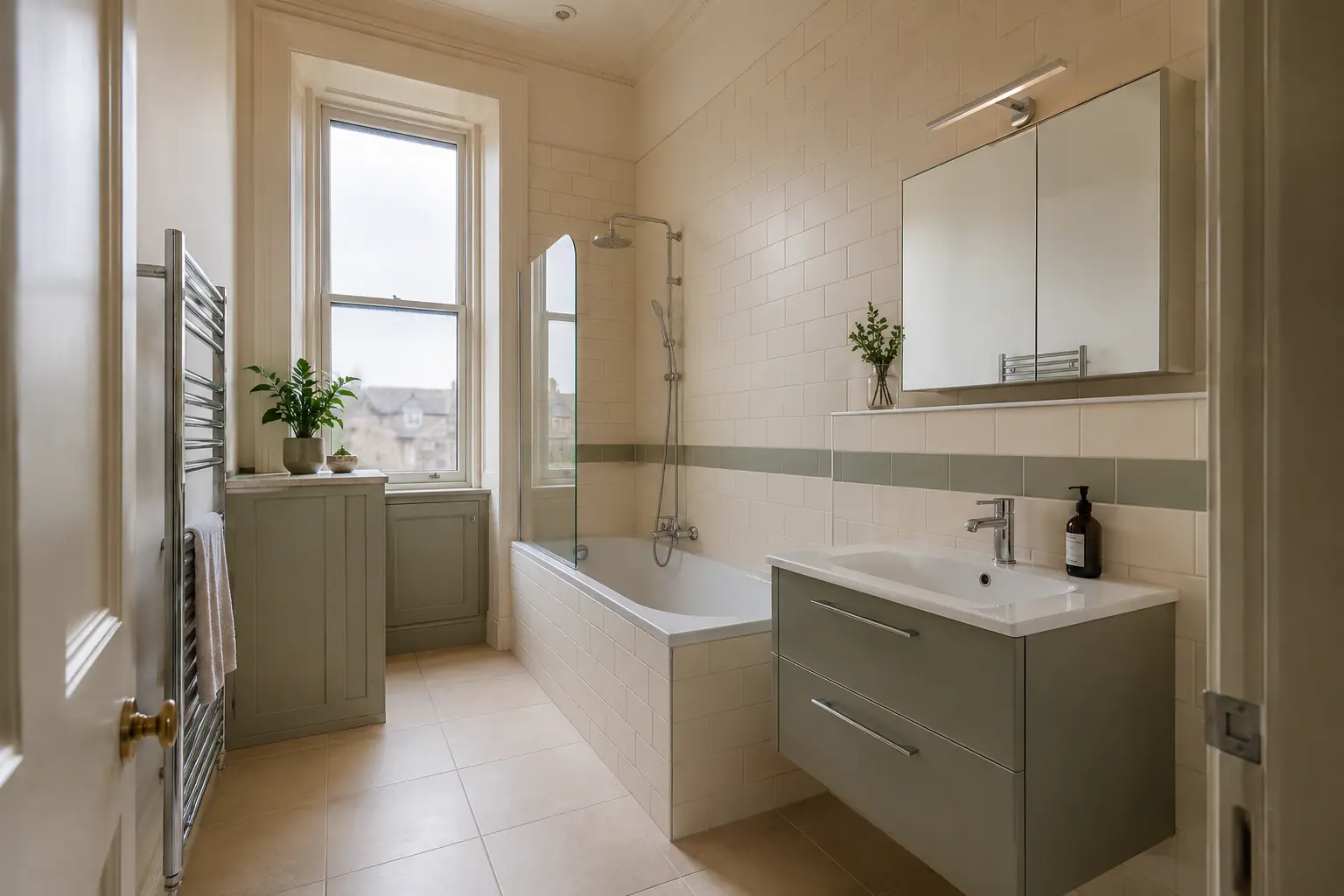

For help with the work described here, see our bathroom plumbing in Glasgow.
What to remember
Check the tiles and underlying cause before agreeing to regrouting.Bathroom fitters Glasgow
Get a quote for your Glasgow bathroom
Tell us what needs changing and add your postcode. We will contact you about the work.