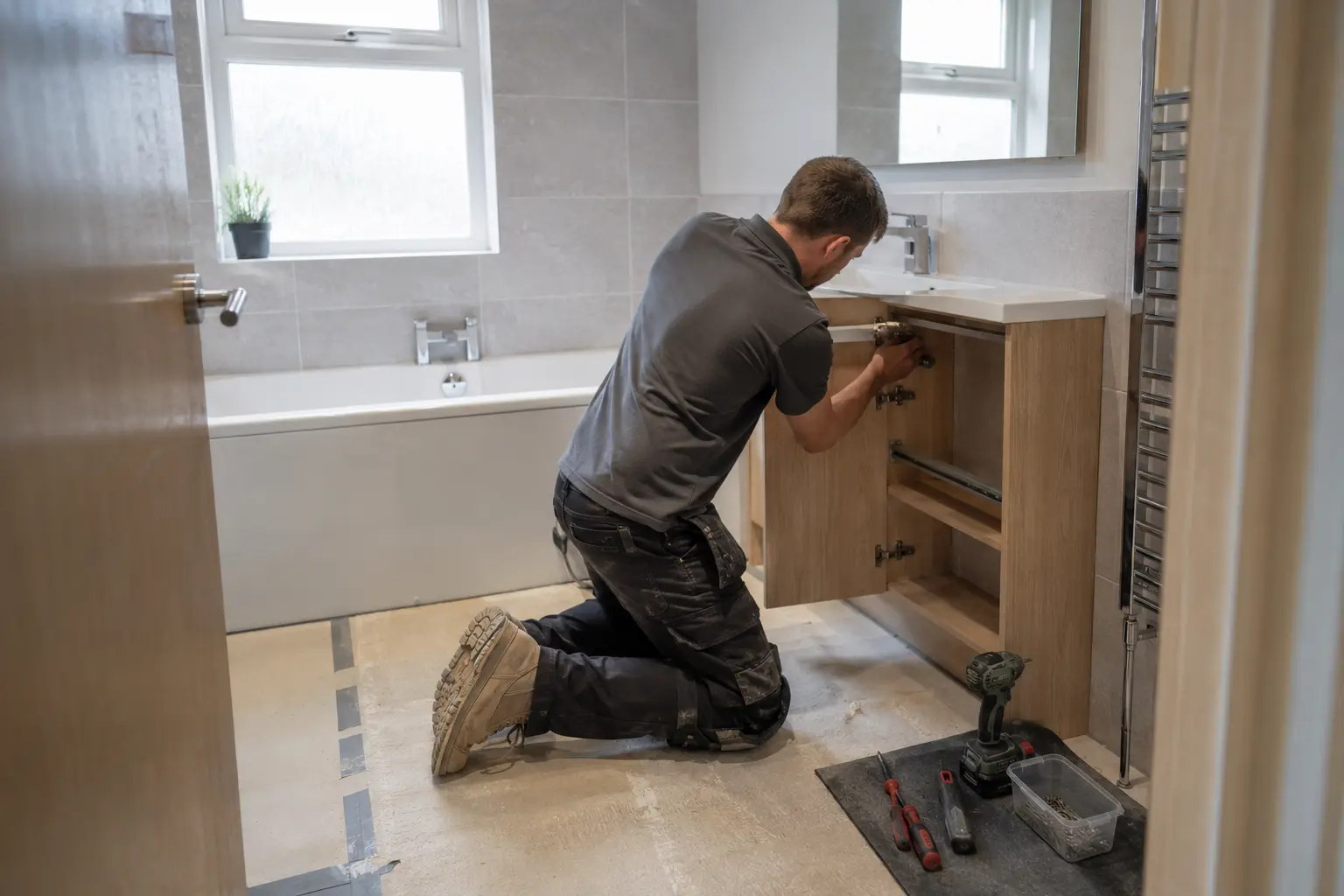
Give the room more than one light source
A bathroom without a window depends on its lighting throughout the day. One ceiling light may make the room bright enough to enter but still leave shadows at the mirror or inside the shower. Think about the jobs carried out in each part of the room: washing, shaving, applying makeup, cleaning and finding stored items.
Plan those needs before the walls and ceiling are finished. It is easier to arrange wiring while the room is being renovated than to add lights afterwards. Ask an electrician to confirm suitable bathroom fittings and positions. Ordinary lights are not automatically suitable wherever you would like to place them.
Light the mirror for everyday tasks
Mirror lighting should help you see your face clearly. A light directly above your head can cast shadows, so compare fittings that spread light across the mirror area. An illuminated mirror or suitable lights beside it may help, depending on the room and available wall space.
Check the controls too. You should be able to switch the light on comfortably with the mirror in its final position. Look at whether a cabinet door hides or interferes with a nearby light. If you are choosing a mirror with heating or charging features, have its electrical requirements checked before ordering rather than treating it as a simple decorative item.
Make the shower and corners visible
A dark shower corner can make cleaning and washing awkward even when the rest of the room looks bright. Consider where the screen, wall and user will block light. The shower area may need its own suitable lighting, with the electrician deciding what can safely be installed there.
Do not judge the design only from the middle of an empty room. Imagine standing at the basin, reaching into a cupboard and stepping out of the shower. A combination of useful light positions can reduce shadows without filling the ceiling with fittings. More lights are not always better if they create glare or uncomfortable reflections.
Choose a comfortable light colour
Light colour affects how tiles, paint and skin tones appear. Warm light can feel comfortable in the evening, while a more neutral light may be useful for mirror tasks. Product descriptions vary, so compare working samples where possible instead of relying on a label such as “warm white” alone.
Keep the different lights coordinated unless you deliberately want separate moods. A very cool mirror beside warm ceiling lights can make the room feel mismatched. Check whether any dimming feature is compatible with the chosen fittings and controls. An electrician can advise on a suitable arrangement rather than adding a dimmer that the lights do not support.
Use reflective surfaces carefully
A mirror and lighter wall finishes can spread light, but they cannot replace a useful lighting plan. Put the mirror where it serves the basin and reflects a sensible part of the room. A very large mirror may be attractive, yet it should not remove needed storage or make lights uncomfortably bright in your eyes.
Glossy tiles and polished fittings can create glare. Compare samples under a similar light before committing to a whole wall. Matte or gently textured finishes may feel calmer while still keeping the room bright. Avoid assuming that an all-white room will automatically be pleasant if its only light leaves deep shadows.
Keep ventilation separate from lighting
A windowless bathroom still needs appropriate ventilation. A bright room can remain damp if moisture has no suitable way out. The fan, duct route and controls should be checked as part of the renovation, not added as an afterthought once new finishes are in place.
Decide how the fan and lights will operate together. Some arrangements allow the fan to continue running after the light is switched off; others use different controls. The right choice depends on the system and the household. Ask for an explanation of how to use it, and keep grilles clear rather than covering them because they interrupt the wall colour.
Check the plan before the room is finished
Mark light, switch and mirror positions on the plan alongside the shower, cupboards and doors. Confirm that controls can be reached and that cabinet doors open freely. Ask who will supply each light and whether the quote includes fitting, testing and any necessary changes to the existing wiring.
After installation, try the lighting from the positions where you actually use the room. Check the mirror, shower and storage, not just the view from the doorway. Keep instructions for specialist controls and replacement parts. A well-lit windowless bathroom should feel comfortable at different times of day and make ordinary tasks straightforward, without needing every light at full brightness all the time.
If somebody uses the bathroom during the night, discuss a comfortable lower-light option with the electrician. It should still make obstacles and floor changes visible. Avoid adding a loose lamp or trailing cable as a shortcut in a room where water and electricity need careful separation.
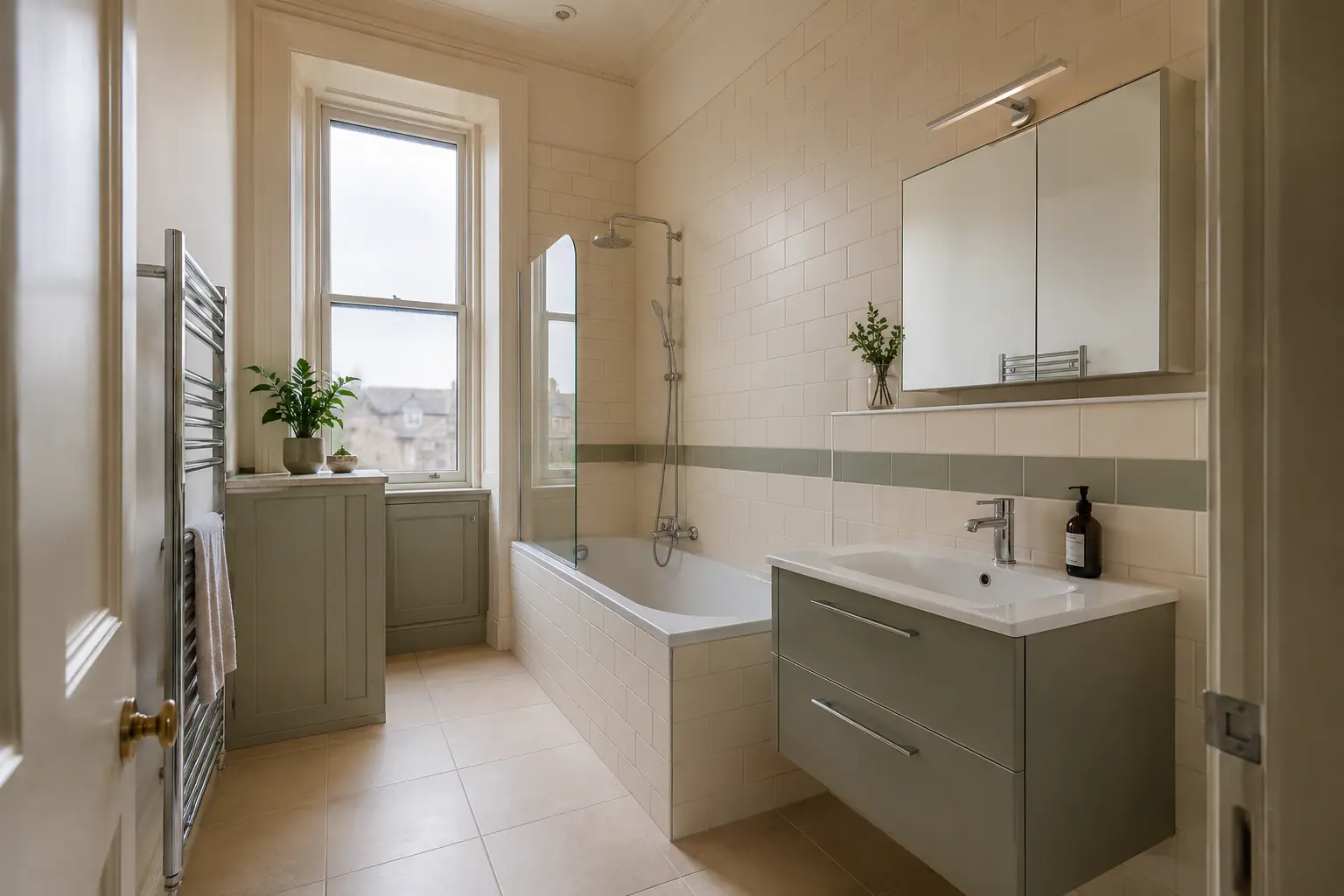
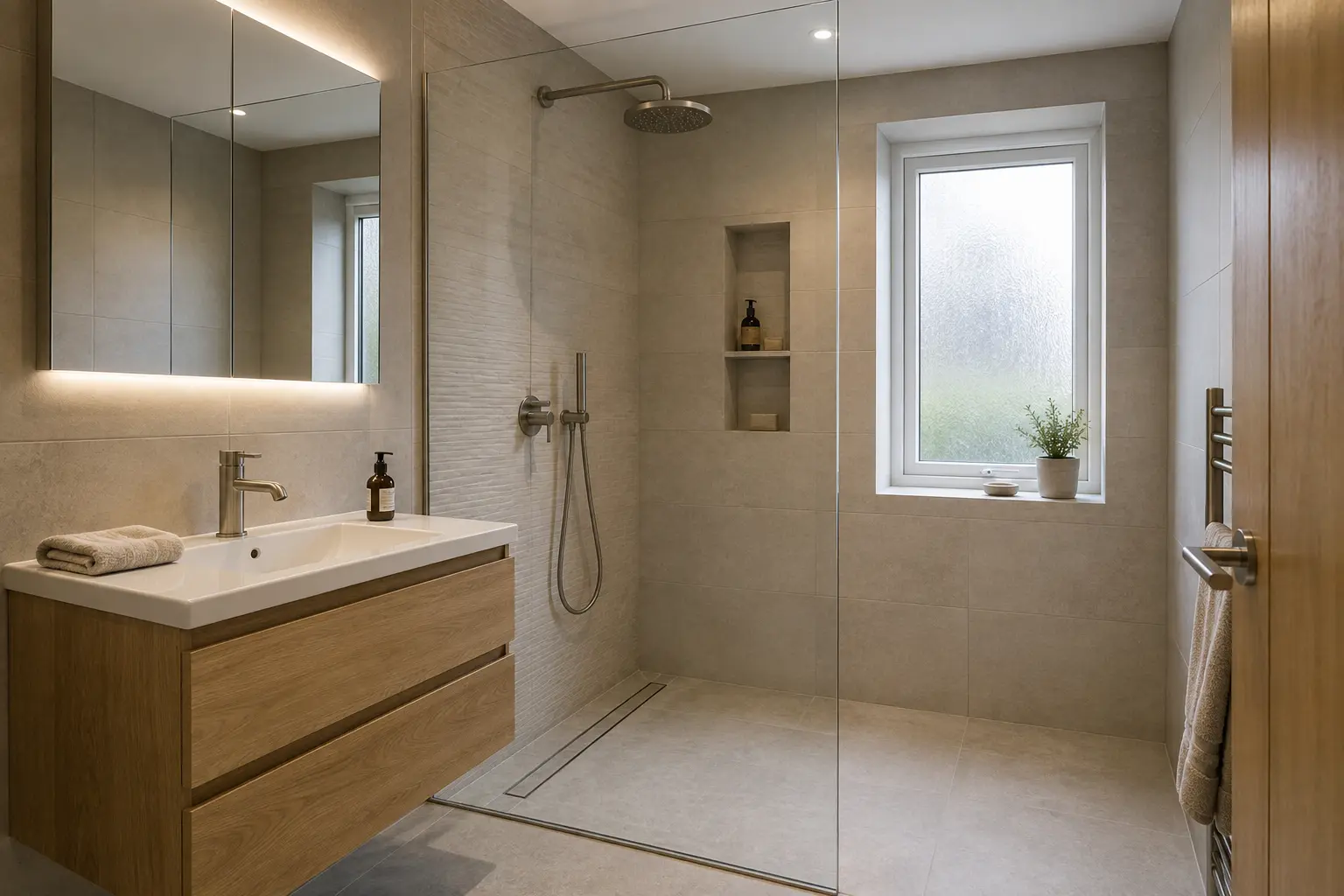
For help with the work described here, see our small bathroom fitting in Glasgow.
What to remember
Agree suitable bathroom lights and positions with an electrician before walls are finished.Further guidance
Bathroom fitters Glasgow
Get a quote for your Glasgow bathroom
Tell us what needs changing and add your postcode. We will contact you about the work.