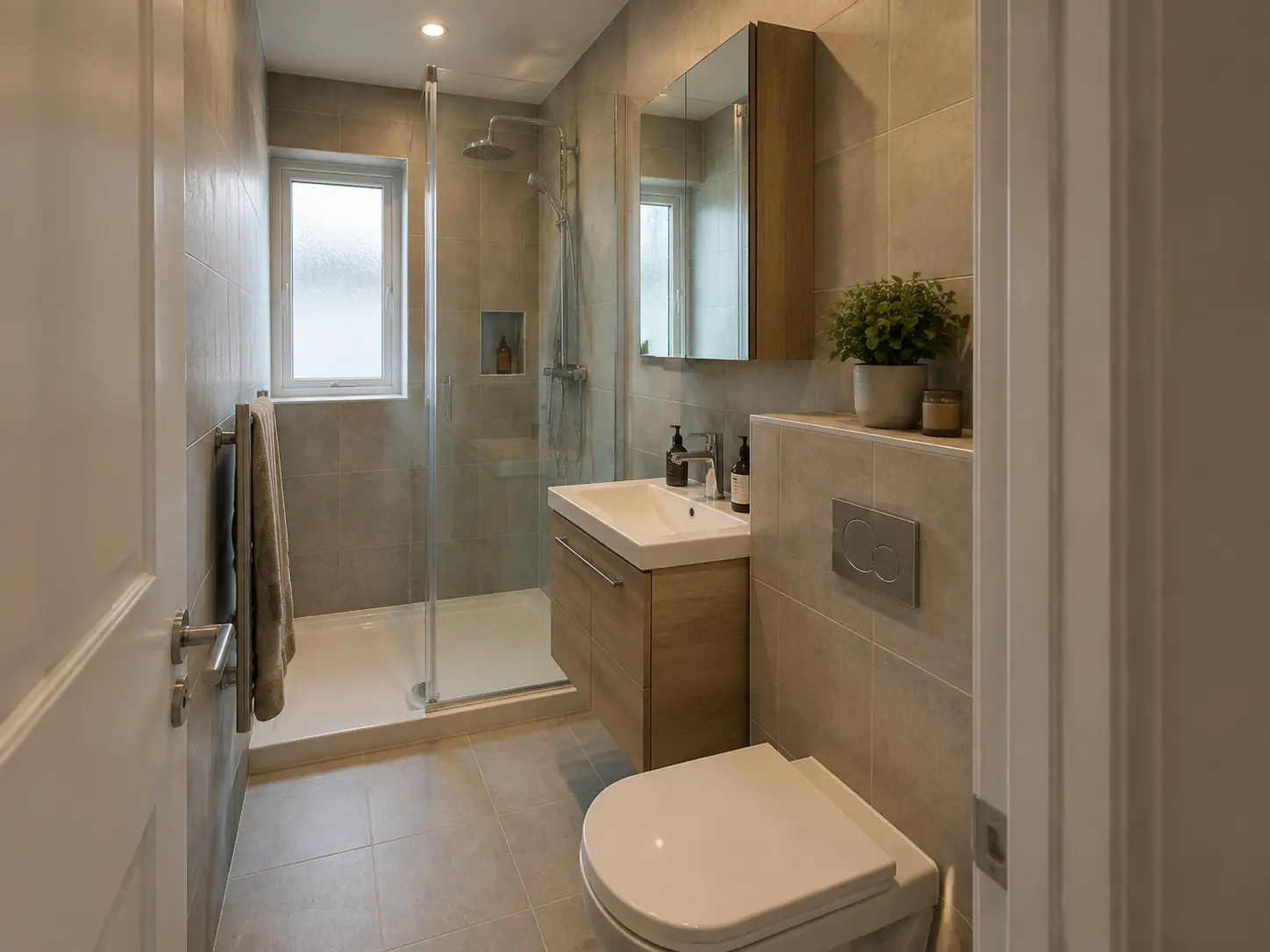
Tile size is only part of the decision
There is no single tile size that makes every small bathroom look bigger. The room’s shape, the wall layout, the grout colour and the number of cuts all affect the result. A large tile can give a less busy finish with fewer joints, but it may need awkward cuts around a window, niche or narrow wall.
Begin with a measured plan and samples of the tiles you like. Ask the tiler how each option would be set out. It is more useful to see where full tiles and cuts will fall than to choose solely from a photograph taken in a room with different proportions.
Large tiles can simplify the wall finish
Larger tiles reduce the number of grout joints across a given area. That can make a plain wall feel less busy, especially with grout close to the tile colour. However, large tiles need suitable, sufficiently flat surfaces and careful handling. The preparation required should be part of the fitting discussion and quote.
Look at the cuts beside the door, along the bath and around any recess. Very narrow strips can draw attention even in an otherwise simple design. Sometimes changing the starting point improves the layout. Ask the tiler to explain the proposed pattern before fixing begins, particularly if the tile has a strong vein or direction.
Smaller tiles suit some awkward shapes
Small tiles can follow certain curves or changes in shape more readily than large tiles. They can also work well as a deliberate feature around a basin or on a selected wall. The extra grout joints are part of the appearance, so choose a grout colour you will be happy to see and maintain.
A small bathroom does not need small tiles everywhere. Mixing a simpler main finish with a limited feature area may be easier to live with. Avoid selecting several detailed patterns before seeing them together. A sample board showing tile, grout, floor and cabinet colour gives a more realistic picture of the finished room.
Check the floor and shower separately
A tile suitable for a bathroom wall is not automatically suitable for the floor. Floor tiles need to be chosen for their intended use, including wet conditions where relevant. Ask about the manufacturer’s information and how the finish feels underfoot. A highly polished appearance should not be the only basis for choosing a shower floor.
A tiled wet-room floor also needs to work with the slope towards its drain. The drain design and floor shape influence tile size and cutting. Let the fitter check the complete system before you order. The waterproofing underneath, the drain connection and the tile layout must work together; attractive tiles alone do not make a wet room.
Grout colour changes the overall effect
Grout that closely matches the tile tends to make the joints less noticeable. A contrasting colour highlights the pattern and can look deliberate, but it also makes uneven lines and cuts easier to see. Try a realistic sample rather than judging the grout from a tiny colour mark on a bag.
Consider cleaning too. No grout colour removes the need for ordinary care, and darker grout is not a repair for damp or mould. Use products suitable for the chosen tiles and joints. Ask which cleaners to avoid, particularly with natural stone or finishes that can be affected by strong chemicals.
Compare the full fitting cost
The shelf price of a tile is only part of the budget. Allow for preparation, waterproofing where needed, adhesive, grout, trims and cutting waste. A patterned layout or many small tiles may take more labour than a simple arrangement. Large tiles can also require additional preparation or handling, so size alone does not predict the cheaper job.
Ask for quantities to be checked against the final layout. Buying too little can delay the work, while a later batch may differ in colour. Keep some matching spares for future repairs if practical. Store the product name and batch details with the bathroom paperwork so replacements are easier to identify.
Make the final choice in your room
Bring the samples into the bathroom and look at them in daylight and under the proposed lighting. A cool grey in a showroom may feel different beside a warm cabinet or an existing window. Hold wall samples upright and floor samples flat, because light falls on them differently.
Choose the tile that works with your room, cleaning routine and budget. Then agree the plan for tile positions and cuts, grout and trims before fitting starts. A small bathroom usually benefits from a few well-coordinated choices and careful workmanship more than from a rule that all tiles must be large, pale or laid in a particular direction.
Check the tile edges and proposed trims together. A thick tile beside a thin adjoining finish may need a different detail at the doorway or corner. Agree that junction before buying so the finished edges look tidy and do not rely on an improvised strip.
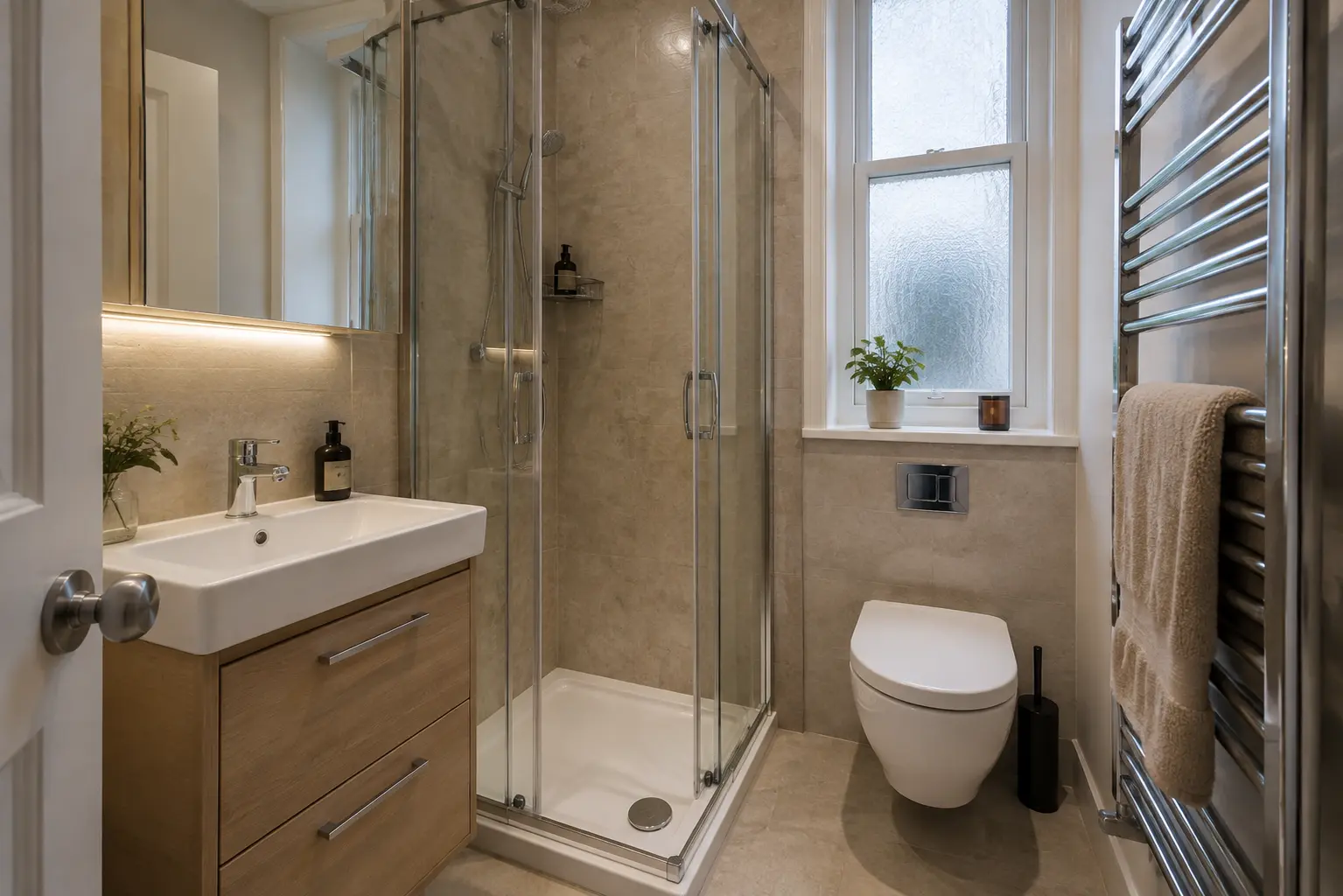
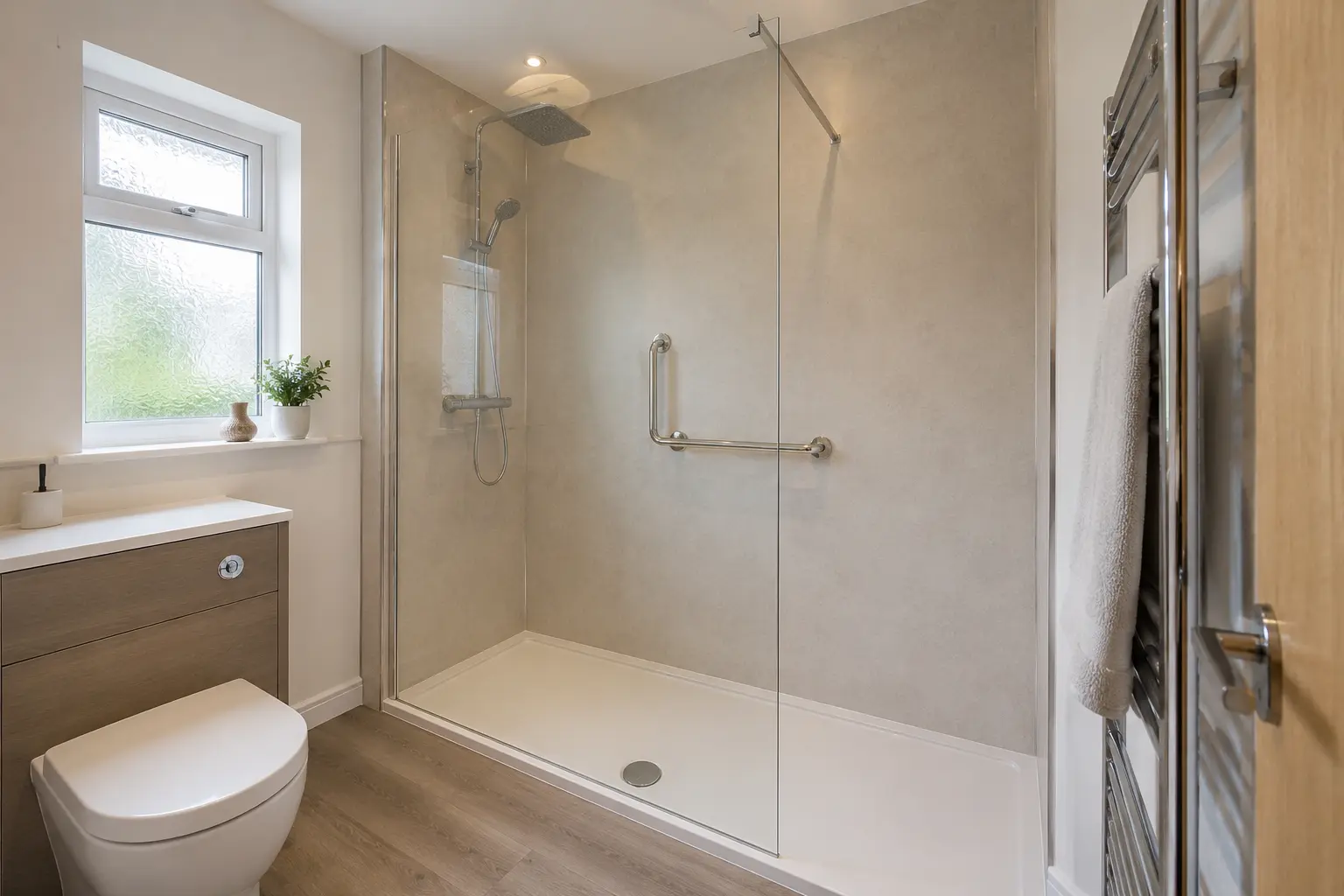
For help with the work described here, see our small bathroom fitting in Glasgow.
What to remember
Compare samples and the proposed cuts before choosing the tile.Bathroom fitters Glasgow
Get a quote for your Glasgow bathroom
Tell us what needs changing and add your postcode. We will contact you about the work.