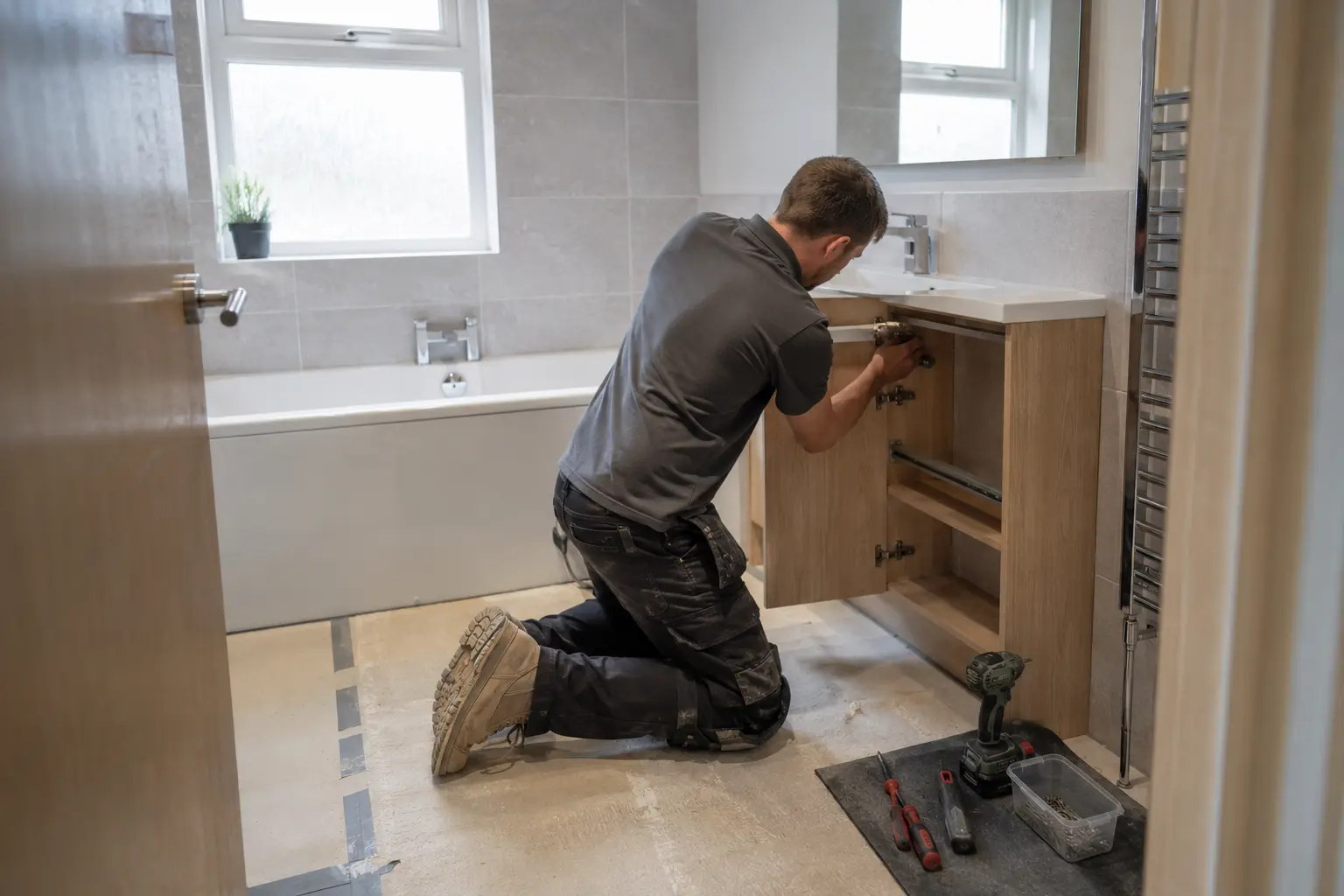
Compare the finish and the fitting work
Tiles and bathroom wall panels can both suit a shower renovation. The useful choice depends on the appearance you like, the existing walls, cleaning preferences and the full fitted cost. Neither option should be chosen only from the price of a tile or panel on a shop shelf.
Start with the areas you want covered and the condition of the room. Ask the fitter to compare complete systems, including preparation, waterproofing where required, corners, trims and sealing. A panel finish with fewer joints may still need substantial wall repairs, while a simple tiled layout may be more straightforward than a complex patterned design.
What tiles let you change
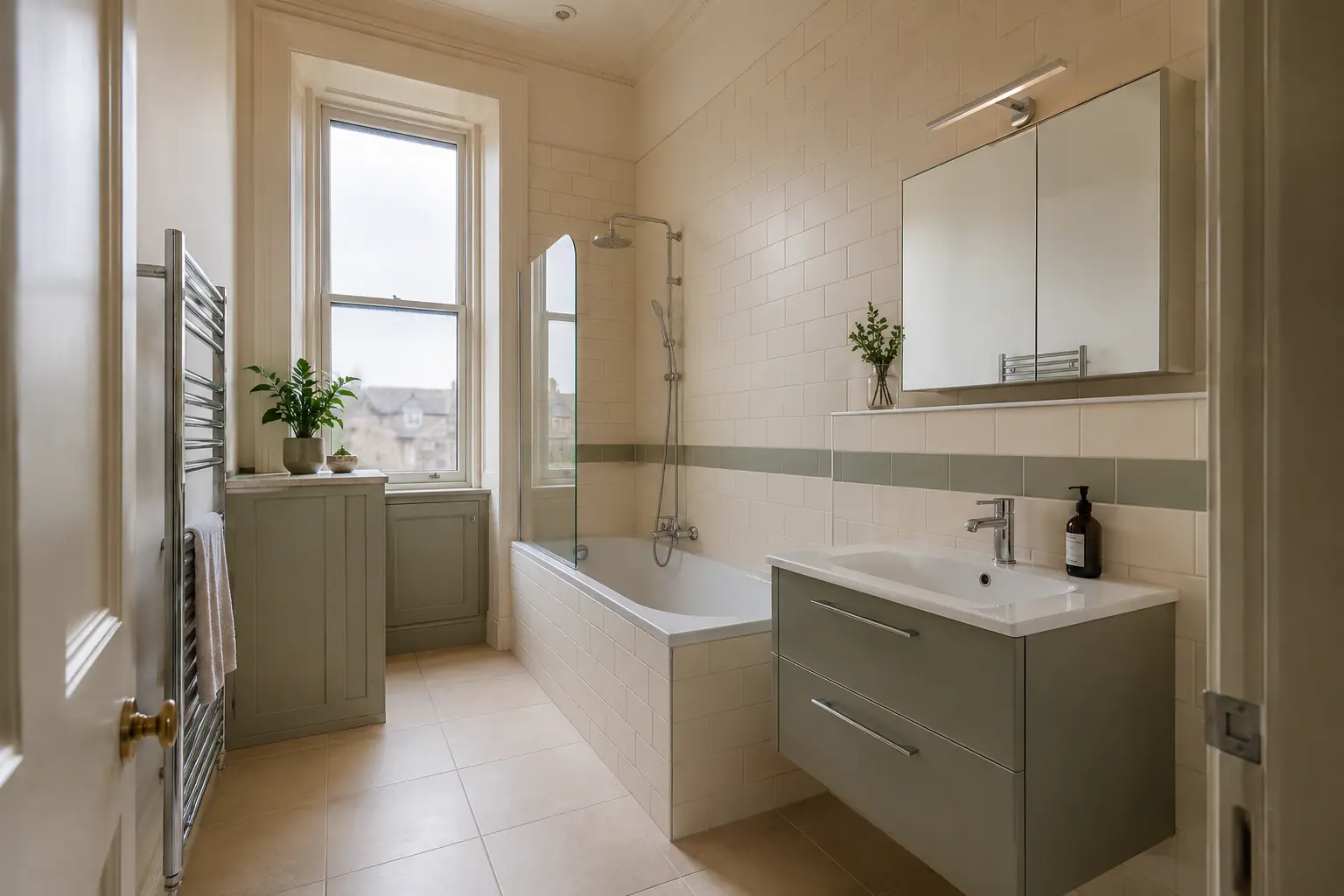
Tiles offer a wide choice of sizes, colours, textures and patterns. You can use one finish throughout or create a smaller feature area. The tile positions and cuts matter: cuts around windows, shelves and doors can affect the finished appearance as much as the tile itself. Ask to see how the proposed pattern will work in your room.
Grout lines are part of the design and the cleaning routine. A matching grout can make joints less noticeable, while a contrasting colour highlights the pattern. Choose a tile suitable for its intended position. Wall tiles and floor tiles are not interchangeable simply because they have the same colour or name.
What wall panels can offer
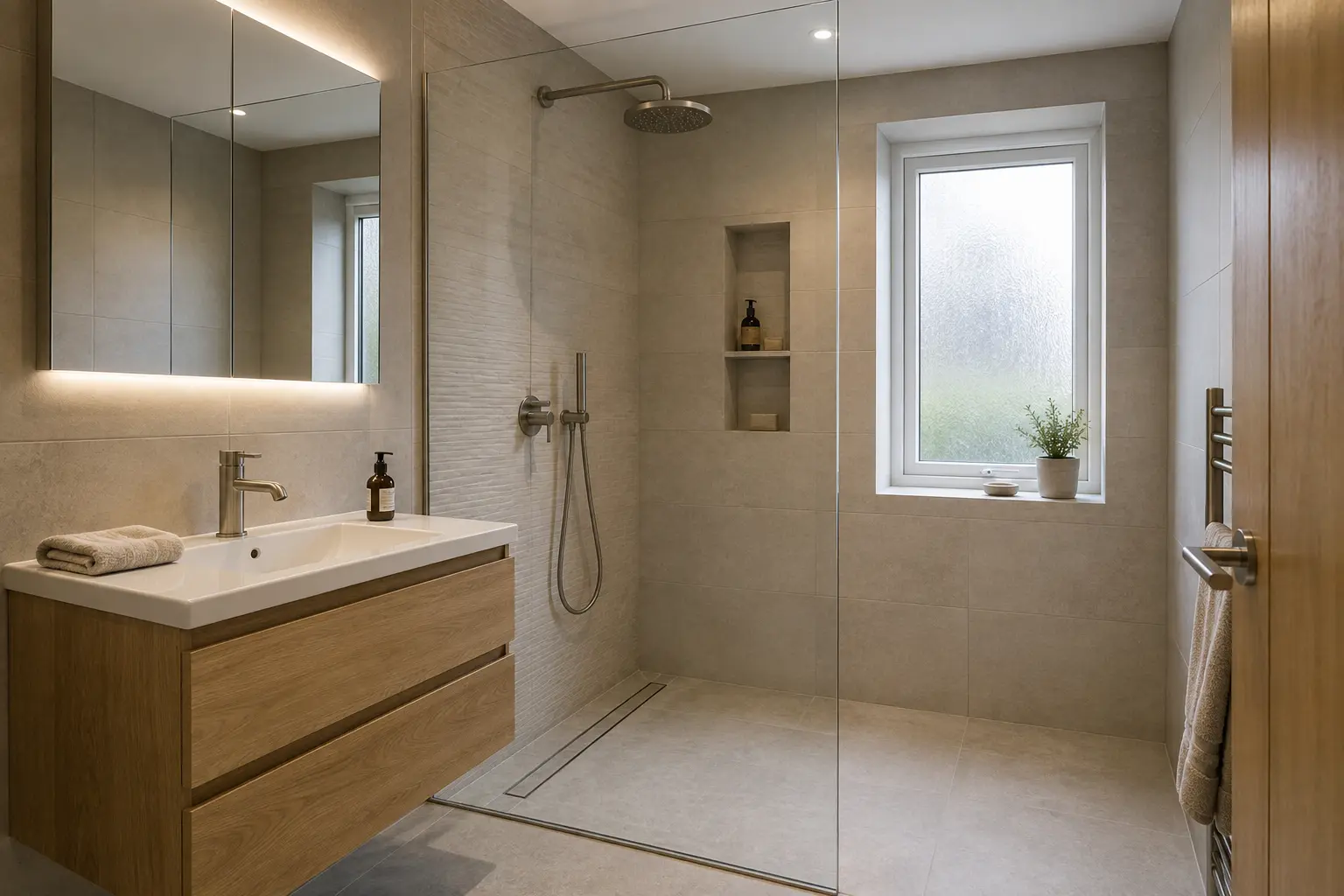
Bathroom wall panels cover larger areas with fewer joints than many tiled layouts. They can give a plain, stone-effect or other decorative finish without a grid of grout lines. Different panel materials and systems have different fitting requirements, so check the exact product rather than treating all panels as the same.
Look at the joining system, corners, edges and finish around the shower tray or bath. Those details remain visible and need to be properly fitted. Ask how a window opening or niche would be handled. A panel can simplify some cleaning, but it still needs suitable sealing and routine care around joints and fittings.
Check the wall underneath
Both finishes need a suitable base. Loose tiles, damaged plaster, damp boards or uneven surfaces may require repair before the new finish goes on. Covering an existing wall is only sensible where the chosen system and the wall’s condition allow it. The installer should check that rather than assuming a new panel can hide every problem.
If the room has leaked, deal with the cause and damaged material first. Ask which preparation is included in the quote and how further problems will be priced if they are found after removal. New walls should not become a way of concealing an unresolved leak or a floor that still moves.
Think about cleaning and repairs
Tiles need care suited to the tile and grout, while panels need products that do not damage their surface or joints. Follow the manufacturer’s guidance rather than assuming a strong bathroom cleaner is suitable for every finish. Abrasive pads can also mark some surfaces, so check before using them.
Ask how damage would be repaired. A single tile may be replaceable if you have a matching spare and the surrounding construction can be protected. A damaged panel can involve replacing a larger area. Keep product details and suitable spares where practical. The ease of repair depends on the actual system and location of the damage.
Compare corners, shelves and accessories
Your bathroom may contain more details than a plain showroom wall. Pipes, the sides of window openings, shower controls and storage all need tidy junctions. Confirm how these will be finished before ordering. A shelf built into the wall or decorative border can add work with either tiles or panels, even if the main wall area is simple.
Rails, screens and cabinets also need suitable support behind the finish. A decorative panel is not automatically a structural fixing point. Tell the fitter about heavy accessories or support rails early so the wall can be prepared correctly. Moving them after the finish is complete may leave holes or require more extensive repairs.
Make the decision with samples and a quote
View tile and panel samples beside your cabinet, flooring and taps. Look at them in the bathroom’s lighting, because a large area can appear different from a small sample under showroom lights. Check texture as well as colour and ask to see the proposed trim finish rather than leaving it unspecified.
Then compare the whole fitted price and the work included. Choose the finish you can maintain and that suits the room you have. At handover, keep cleaning instructions, product names and any stated care restrictions. The better choice is the complete installation that works for your home, rather than a blanket claim that tiles or panels are always superior.
Check how much space the proposed finish will take up. Boards, adhesive, support strips or panels can change the finished room dimensions. In a tight shower area, that may affect the tray, screen or furniture size. Have the fitter confirm those dimensions before ordering products that need to fit closely between the finished walls.
For help with the work described here, see our bathroom installation in Glasgow.
What to remember
Include preparation, trims, joints and fitting when comparing prices.Bathroom fitters Glasgow
Get a quote for your Glasgow bathroom
Tell us what needs changing and add your postcode. We will contact you about the work.