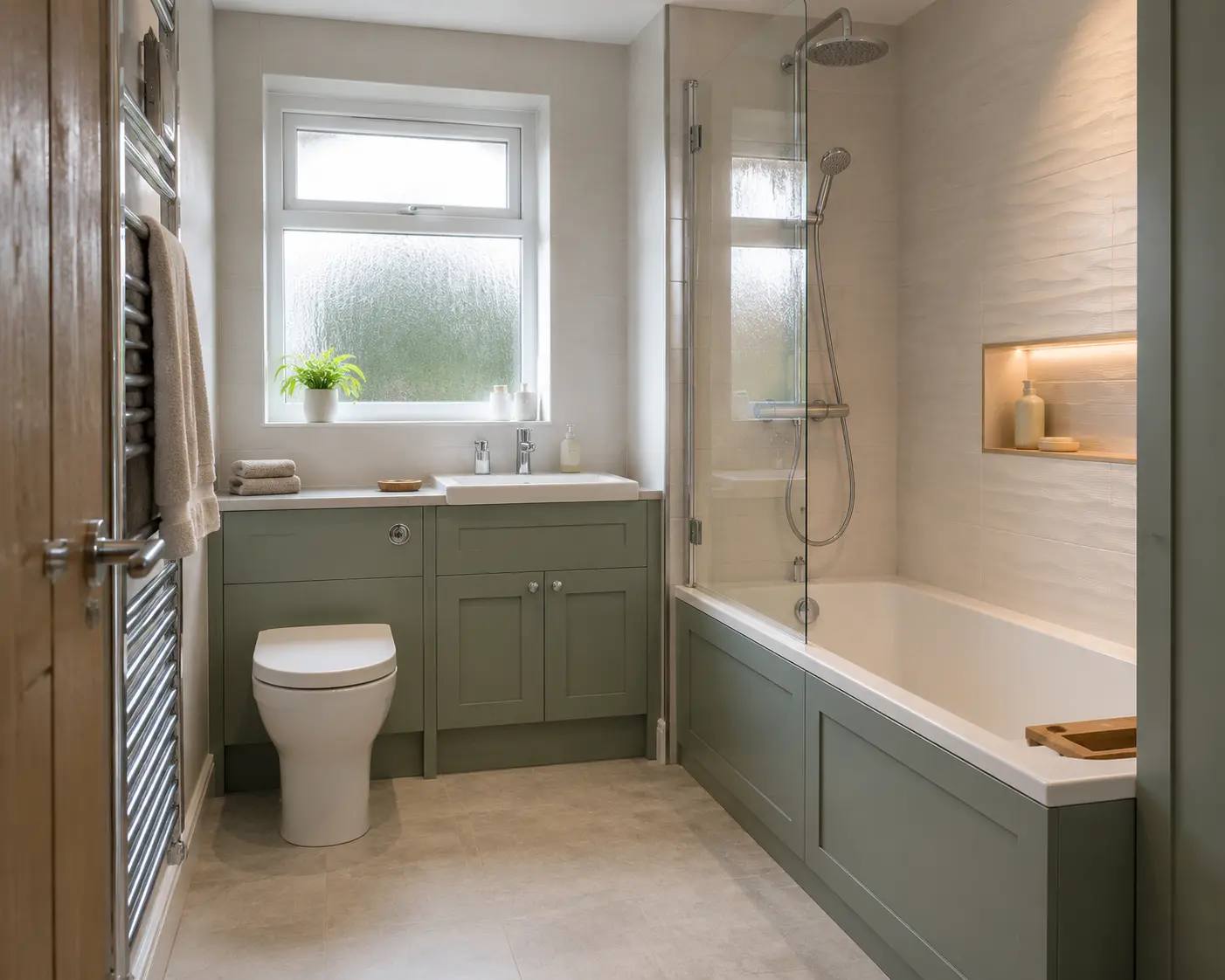
Find out whether the moisture is condensation
Condensation forms when warm, damp air meets a colder surface. In a bathroom, you may see water on a mirror, window or wall after showering. A leak or penetrating damp can create similar-looking marks, so do not assume every patch is caused by steam. Note where it appears and whether it follows shower use, wet weather or another event.
If a mark grows, the surface feels damaged or water appears away from the usual steamy areas, ask for the cause to be checked. Repainting before that assessment can hide a useful clue without solving the problem underneath. Photographs and dates can help explain a recurring pattern.
Check that the fan actually removes air
A fan making a noise does not prove that moisture is reaching outside. The grille, duct and outlet all form part of the ventilation route. A blocked grille, damaged duct or unsuitable outlet can limit performance. Ask a suitable professional to assess the full route if the room remains damp despite normal fan use.
Only clean accessible parts in the way the manufacturer permits, with the equipment safely isolated as instructed. Do not open electrical parts or reach into a running fan. If there is a burning smell, unusual noise or other sign of a fault, stop using the equipment and arrange an appropriate check.
Use ventilation as intended
Read the instructions for the fan controls. Some fans keep running after the light goes off; others respond to humidity or a separate switch. If the fan is designed to keep running after the light goes off, routinely switching off its power may prevent it from doing its job. Ask the installer to explain how the system should be used.
A window can help where it is safe and practical to open one, but it does not automatically replace suitable mechanical ventilation. Keep vents unobstructed and discuss any draught or noise problem rather than blocking the opening. The room needs a way for replacement air to enter as damp air leaves.
Reduce lingering water after use
Wiping excess water from a screen or wet surface can reduce the amount left to evaporate into the room. Hang towels where they can dry instead of leaving a damp pile on the floor. Avoid using the bathroom as a place to dry a large load of laundry if moisture is already difficult to manage.
These habits can help, but they do not repair a failed fan or a leaking pipe. Keep the advice proportionate to the problem. If the room still stays wet for long periods, have the ventilation, heating and building condition assessed rather than assuming the household simply needs to wipe every surface more often.
Look at cold surfaces and heating
Very cold walls or corners may collect moisture more readily. The cause can involve the building, insulation, heating pattern or airflow around furniture. A new coat of paint alone does not change those conditions. If the same area repeatedly becomes damp, ask someone suitably qualified to assess why that surface stays cold.
Keep cupboards and stored items from blocking intended ventilation paths. Discuss heating as part of a bathroom renovation, including whether the proposed towel rail meets the room’s needs. Do not assume a decorative rail will provide the same room heating as the radiator it replaces. The required heat output should be checked for the space.
Deal with mould without hiding the cause
Mould should not be treated as a normal decorative problem. Follow suitable public-health or product guidance for any small area you intend to clean, and avoid mixing cleaning chemicals. Extensive, recurring or hidden mould needs proper assessment, particularly where materials are damaged or someone in the household is vulnerable to its effects.
Replacing silicone or painting over a stain may improve appearance temporarily while the moisture problem continues. Find and address the cause first. If you rent, report persistent damp or mould to your landlord or letting agent and keep a record of what you have reported. Do not disturb damaged building materials without advice.
Include ventilation in a renovation quote
When replacing a bathroom, ask the fitter to check the fan, duct route, outlet and controls before choosing new finishes. Record the ventilation work in the quote. Tiles or panels may be easier to wipe than an old surface, but they should not be presented as a cure for moisture that the room cannot clear.
At handover, have the controls demonstrated and keep the maintenance instructions. Continue watching any previously affected areas after the work. If damp returns, seek a diagnosis rather than repeatedly changing the surface finish. A drier bathroom depends on managing moisture and repairing faults together, not on one product advertised as resistant to mould.
Keep a simple record of the conditions when moisture is worst: after showers, in cold weather or during rainfall. You do not need specialist measurements to describe what you see. That record can help a professional distinguish several possible causes and choose a useful inspection, rather than replacing products without understanding why the problem returns.
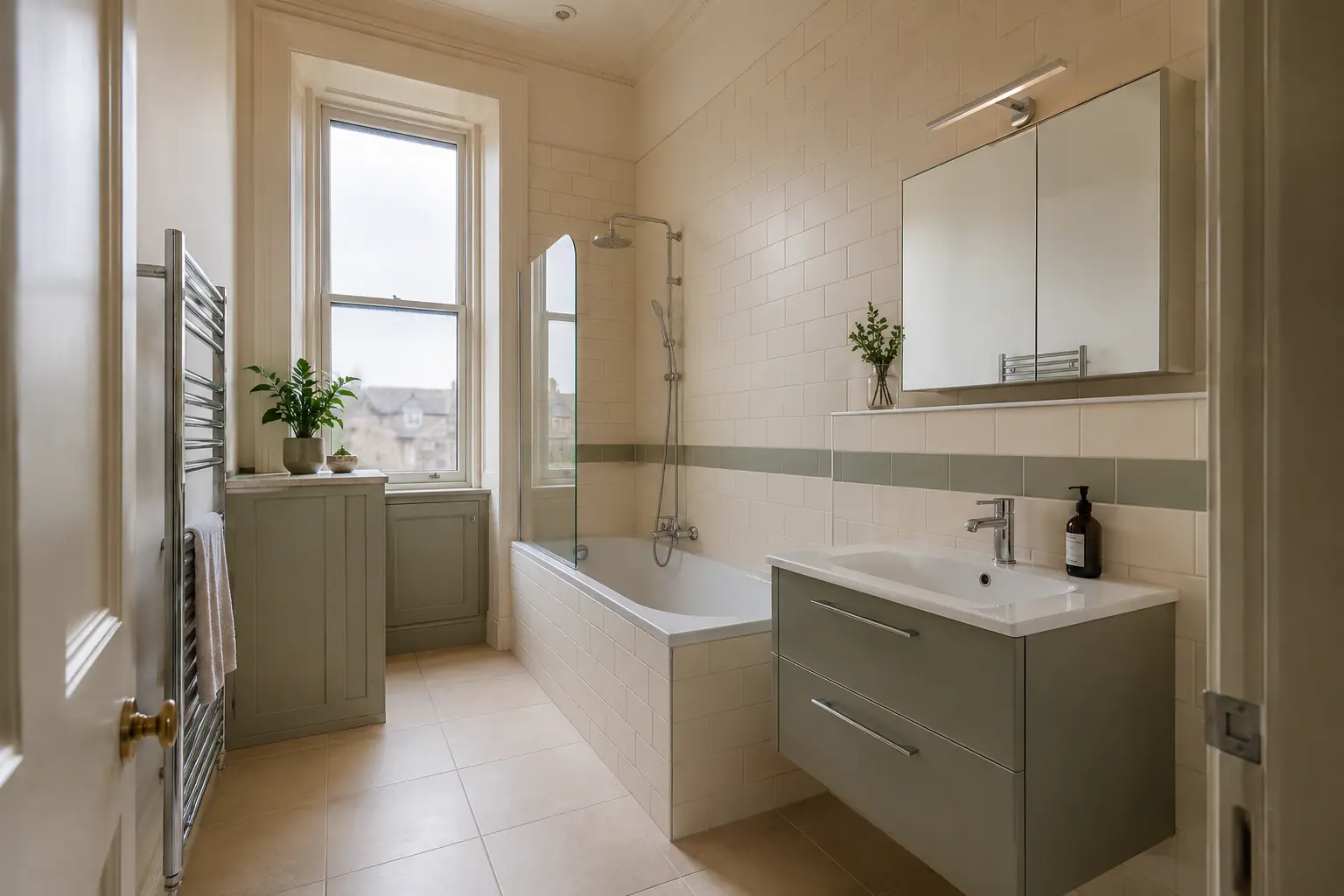

For help with the work described here, see our bathroom installation in Glasgow.
What to remember
Check the cause of damp and the complete ventilation arrangement before covering marks.Further guidance
Bathroom fitters Glasgow
Get a quote for your Glasgow bathroom
Tell us what needs changing and add your postcode. We will contact you about the work.