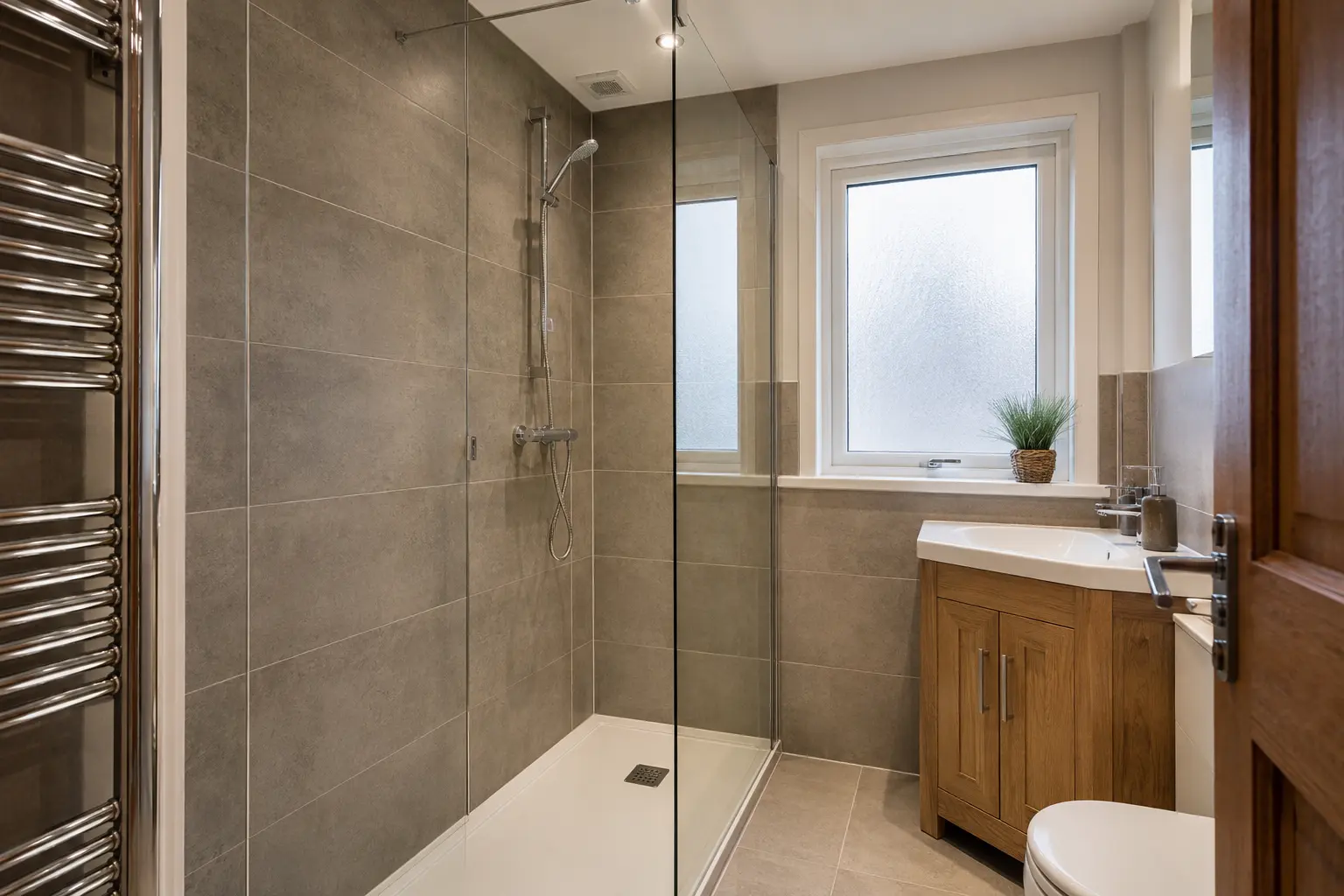
How the two shower types work
An electric shower heats cold water inside the shower unit. A mixer shower combines hot and cold water supplied by the home. That is the basic difference; the best choice depends on the plumbing, electrical installation and the shower experience you want. The word “electric” does not simply mean a mixer shower with illuminated controls.
Start by identifying the shower you have and the home’s hot-water system. If you are unsure, ask the installer to check. A photograph of the visible controls may help identify a model, but it does not show all the pipework or electrical supply hidden behind the wall.
Check what is already installed
Replacing a shower with a suitable model of the same general type may involve less work than changing systems, but compatibility still needs checking. Pipe entries, cable positions, fixing holes and product dimensions can differ. The old unit’s outline may also leave marks or holes that the new shower does not cover.
Give the installer the exact model you are considering before buying it. Ask whether the existing connections can be used and which wall repairs are included. A similar-looking shower is not proof of a straightforward swap. The quote should reflect the actual connection work rather than assuming all wall-mounted units fit the same way.
Understand the hot-water arrangement
A mixer shower relies on the home’s hot-water supply. The installer needs to know how that water is provided and whether the available supply suits the selected model. Other hot-water use in the house may be relevant when discussing performance. Ask for the chosen shower’s requirements to be checked against the system you have.
An electric shower heats its own water, which can be useful where that arrangement suits the property. It still needs an adequate cold-water supply and suitable electrical installation. Neither type should be chosen from a claim about being “powerful” without checking what the product needs to work as intended in your home.
Let an electrician assess an electric shower
An electric shower is a fixed electrical appliance used where people are wet. A registered competent electrician should assess and carry out the electrical installation work. Do not assume a higher-rated replacement can use the old cable, protective devices and connections without checks. The electrical rating is not just an upgrade label on the box.
Ask the quote to identify any electrical work separately enough that you understand it. If the shower stops working, do not open its casing or attempt internal checks yourself. Record the model and fault symptoms for the installer. Electrical Safety First provides bathroom safety guidance if you want to understand why this work needs particular care.
Compare controls and everyday use
Try the controls if you can. Large, clear controls can be easier to use with wet hands than small smooth knobs. Check how temperature and flow are adjusted and whether the markings are easy to read. A design that looks neat in a photograph may be awkward for somebody with limited grip or vision.
Consider the shower head and rail as well. An adjustable handset can suit people of different heights and help with cleaning. An overhead head offers a different experience but may not meet every household need by itself. Ask whether the selected unit permits the accessories you want, rather than adding an incompatible head later.
Think about repair access and running costs
A concealed mixer can give a tidy finish, but its valve still needs a route for servicing. Ask how parts can be replaced without unnecessarily damaging the wall. For any shower, keep the model number and instructions so the correct cartridge, head or other part can be identified when needed.
Running costs depend on energy prices, the water-heating system, flow and how long people shower. Avoid choosing from a blanket promise that one type will always be cheaper. Compare the product’s requirements and your household habits. If cost is a priority, ask for a practical explanation using your own system rather than a generic saving claim.
Compare the complete installation
Ask for the price of the unit and the work needed to fit it. Include changes to pipework, electrics, wall finishes and any screen or tray affected by the replacement. If both options are feasible, compare the full cost and the controls you prefer, not just the product price on a retailer’s page.
Keep the agreed model and work in the quote. At handover, have the controls, how to switch off the supply safely and routine cleaning explained. Follow the manufacturer’s instructions for the head and hose. A suitable, correctly installed shower that is comfortable to operate is a better result than choosing an impressive specification that the existing home cannot support.
Consider what happens when another household member needs water at the same time. Tell the installer about the busiest morning routine, rather than describing only one quiet shower. That gives useful context for the supply checks. If the existing shower has become weaker recently, ask for the cause to be investigated before assuming a different type is the answer.
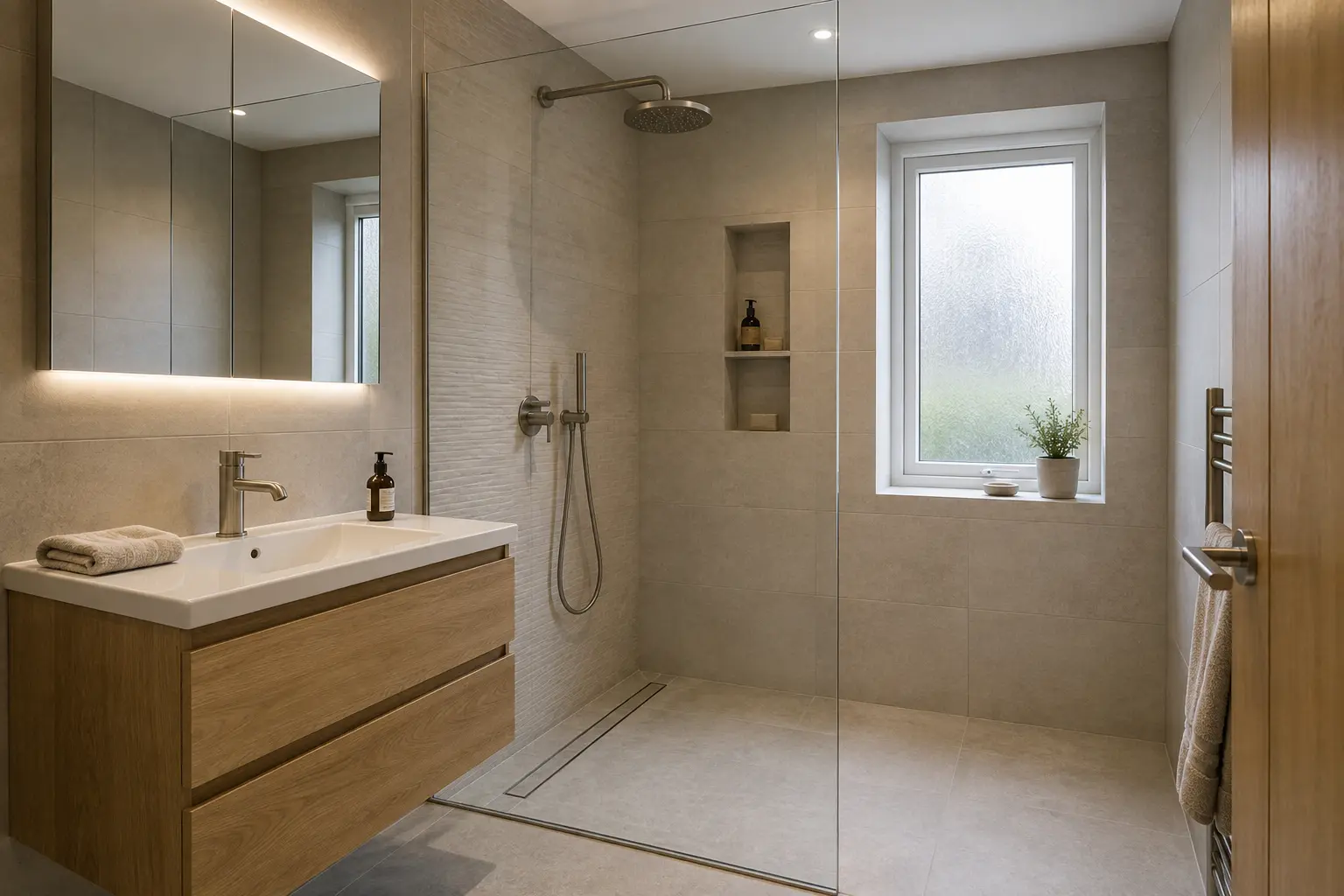
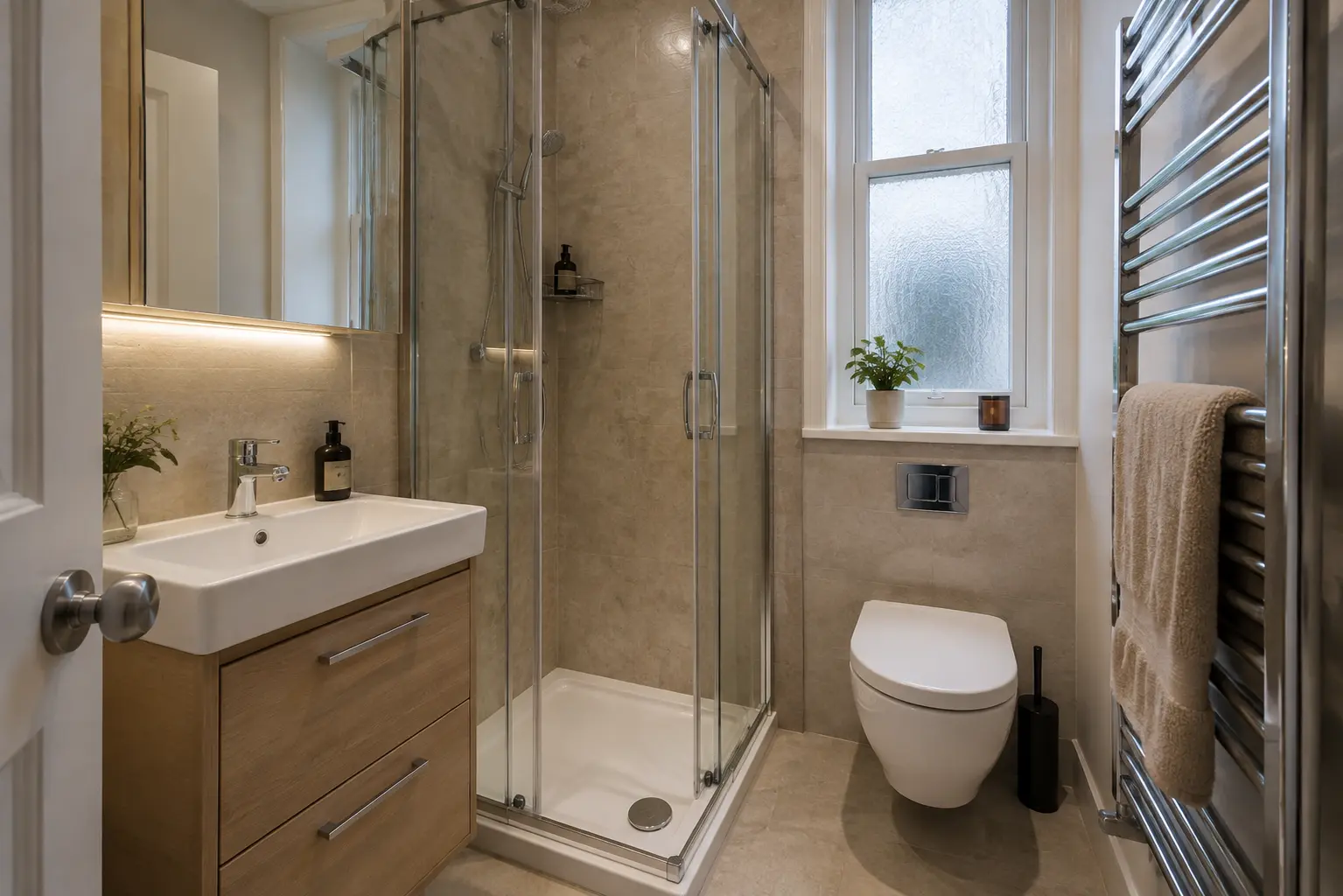
For help with the work described here, see our walk-in shower fitting in Glasgow.
What to remember
Have the chosen shower checked against the water supply and electrical installation.Further guidance
Bathroom fitters Glasgow
Get a quote for your Glasgow bathroom
Tell us what needs changing and add your postcode. We will contact you about the work.