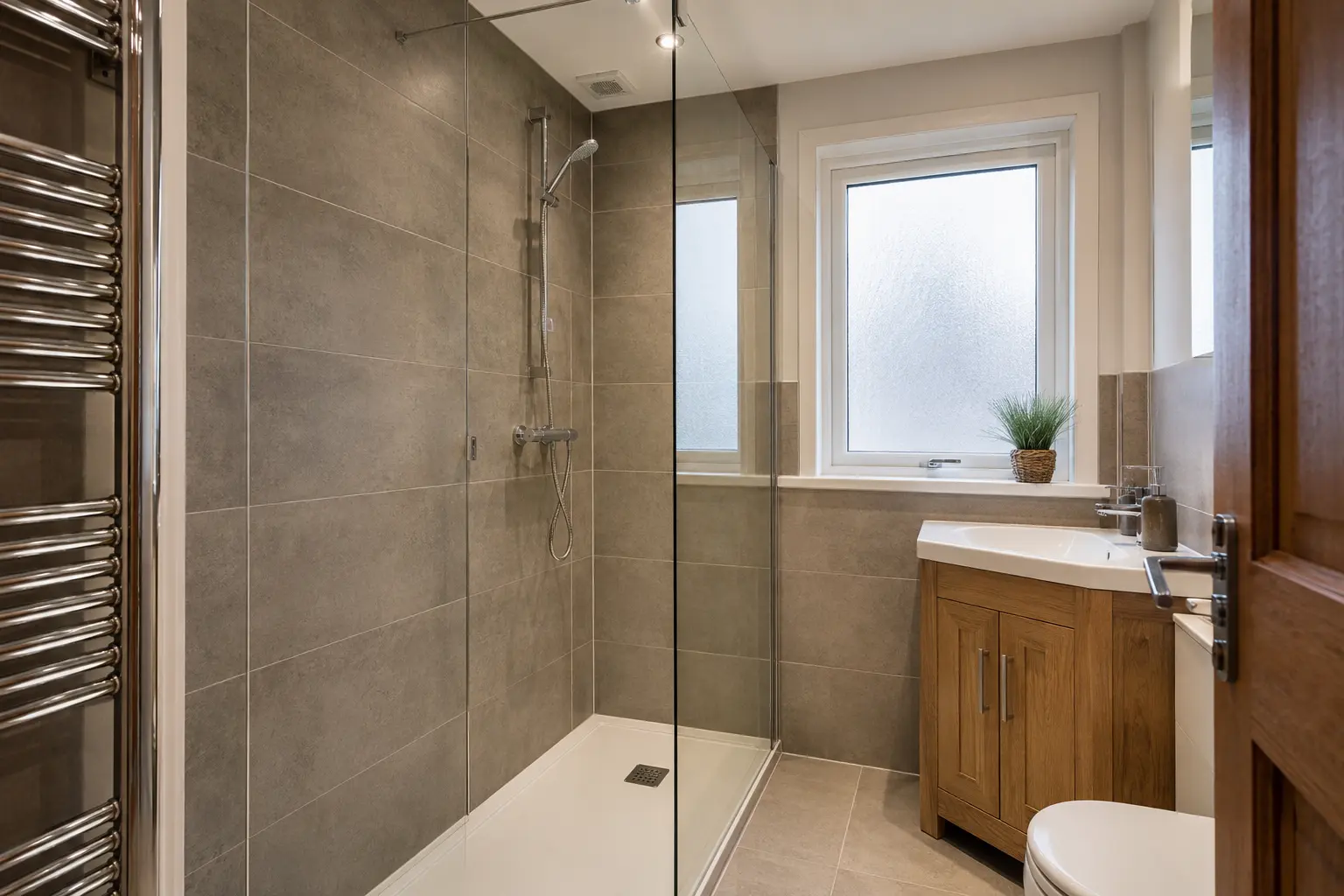
Work out where the water comes from
Water outside a walk-in shower is not always caused by the open entrance. It may be spray passing the screen, water escaping through a failed joint or drainage that cannot clear the shower area properly. The solution depends on the cause, so avoid ordering extra glass before the problem has been checked.
Note when and where the water appears. Does it happen as soon as the shower starts, only while someone washes or after water has collected around the drain? Photographs can help explain the pattern to a fitter. Stop using the shower and seek help if water is reaching electrics or causing damage below.
Check the screen and opening
A walk-in screen needs to suit the shower area and spray pattern. A short screen can leave a wide opening but little protection for the rest of the room. A longer screen can improve containment while reducing the space available to get in. The right balance depends on the room and the people using it.
Ask the fitter to check the usable entrance before suggesting more glass. A small glass panel at the screen’s open end may help in some layouts, while another room may suit a door. Do not narrow an entrance that someone needs for mobility equipment or assistance without reviewing the whole arrangement with them first.
Look at the shower head position
The direction and spread of water affect splash. A head facing straight towards the entrance can send spray beyond the screen. An overhead head and a handset can behave differently, especially when someone moves beneath them. The position should be considered alongside the screen rather than as a separate product choice.
Check whether the current handset is being used in the intended holder position and follow the product instructions. Do not modify the head or add an unapproved accessory to an electric shower. If moving the head or controls is proposed, ask about pipework and wall repairs before assuming it is a small adjustment.
Check how the floor drains
Water collecting faster than it leaves can spread outside the shower area. Hair or debris may block a drain, but poor drainage can also involve the fitting beneath the drain, pipework or floor arrangement. Only carry out cleaning that the product instructions allow at the accessible drain; leave dismantling or concealed work to a suitable professional.
A wet-room floor should guide water towards its drain as designed. If water pools away from it or regularly reaches the doorway, ask the installer to assess the floor. An extra bead of sealant or an improvised ridge is not a reliable substitute for correcting the underlying drainage or construction problem.
Inspect seals and junctions
Water appearing beside the tray or behind a screen can be a sealing issue rather than ordinary splash. Look for visible gaps, loose sections or changes in the surrounding finish without pulling components apart. A fitter can check whether the screen, tray and wall junctions follow the manufacturer’s installation details.
Do not seal every visible gap as a precaution. Some enclosure designs have specific drainage paths that must remain open. Adding sealant in the wrong place can make a problem worse. Keep the model information if you have it, so the installer can check the correct instructions rather than guessing from the appearance of the frame.
Protect nearby fittings through the layout
Even a well-designed open shower can leave some moisture nearby. Towels, toilet rolls and furniture should be positioned with that in mind. Avoid placing a cabinet made for dry conditions beside an unprotected opening. The surrounding floor and wall finishes need to suit their expected exposure to water.
If the bathroom is being redesigned, mark the likely wet area on the plan. Give the shower enough room to work while leaving a practical route to the basin and toilet. A more enclosed shower may be a better choice in a very compact room where keeping everything outside the spray is otherwise difficult.
Agree a repair that addresses the cause
Ask the fitter to explain whether the issue is spray, sealing, drainage or a combination. The proposed work should relate directly to that finding. Replacing the whole shower may not be necessary, but a persistent leak should not be dismissed as normal just because the entrance is open.
After repairs, have the shower checked in normal use and confirm how long new seals need to dry and harden before using it yourself. Keep the care instructions and ask how the drain should be cleaned. A good result contains water sensibly while keeping the entrance comfortable, rather than relying on towels around the tray after every shower.
If the problem began after changing the shower head, mention that at the inspection. The new spray pattern may be sending water somewhere different, even though the screen and tray have not moved. Keep the old and new model details where available. That information can help separate a product mismatch from a fault in the original installation.


For help with the work described here, see our walk-in shower fitting in Glasgow.
What to remember
Find the cause before buying extra glass or adding sealant.Bathroom fitters Glasgow
Get a quote for your Glasgow bathroom
Tell us what needs changing and add your postcode. We will contact you about the work.