Start with the fittings you enjoy using
Modern and traditional describe a look, but they do not tell you whether a bathroom will suit daily life. Either style can include a comfortable bath, useful storage and a shower that is easy to clean. Begin with the layout and the needs of the people using the room, then decide which details you prefer.
Collect a few photographs and name what attracts you in each. It may be a panelled cupboard, a plain shower screen, warm wood or a patterned floor. Identifying those parts is more useful than trying to copy an entire bathroom that has a different shape, size or budget from yours.
What gives a bathroom a modern look
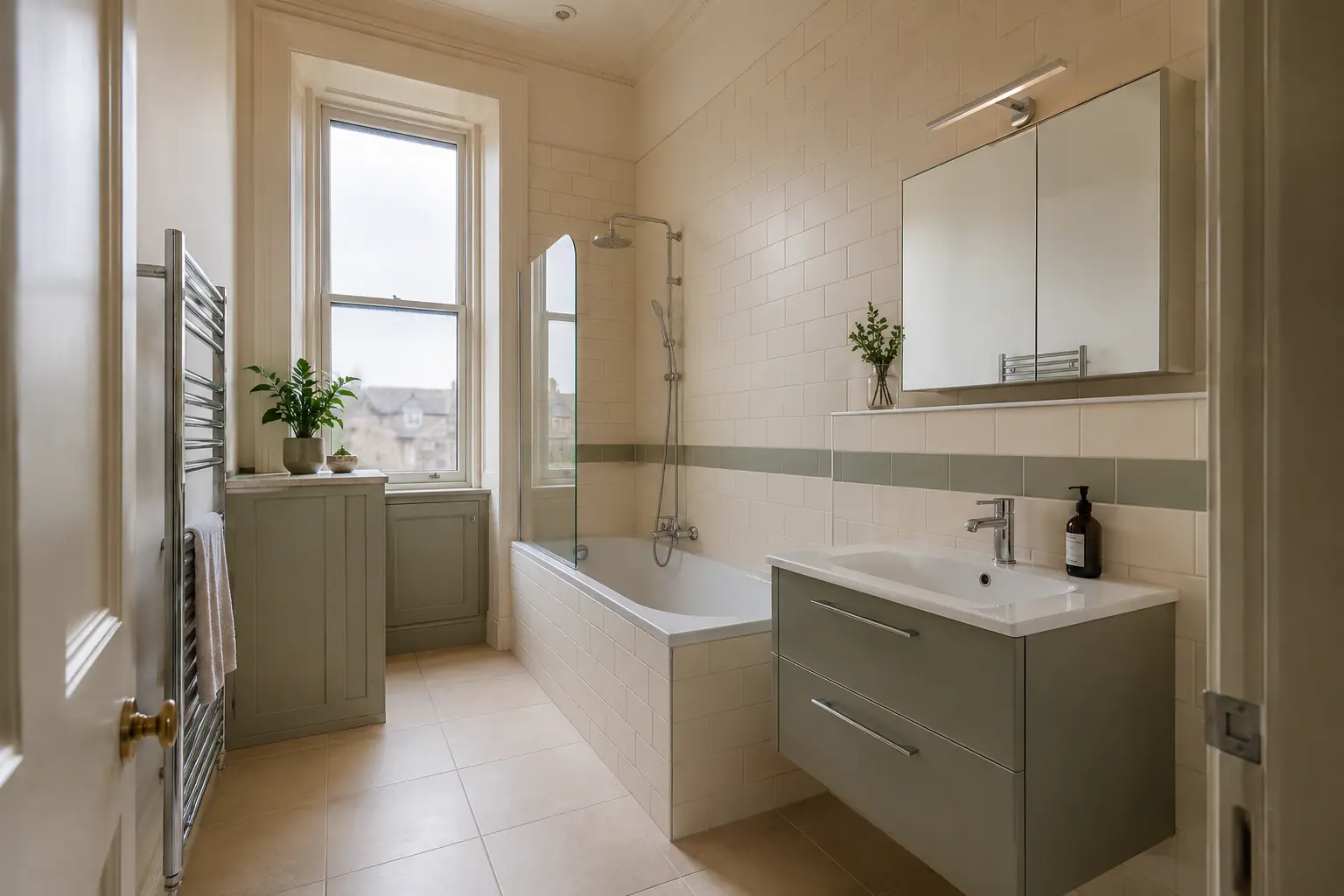
Modern bathrooms often use simple cabinet fronts, plain glass and fittings with fewer decorative details. Pipes may be concealed, and a wall-hung basin cabinet can leave visible floor underneath. That can make a compact room feel less crowded, provided the unit gives you enough storage and the wall can support it.
Concealed equipment still needs maintenance access. Ask how a shower valve or cistern can be reached if a part needs replacing. A neat finish should not depend on permanently hiding something that needs servicing. Choose the model and access arrangement together, rather than treating repair access as a problem to solve after tiling.
What gives a bathroom a traditional look
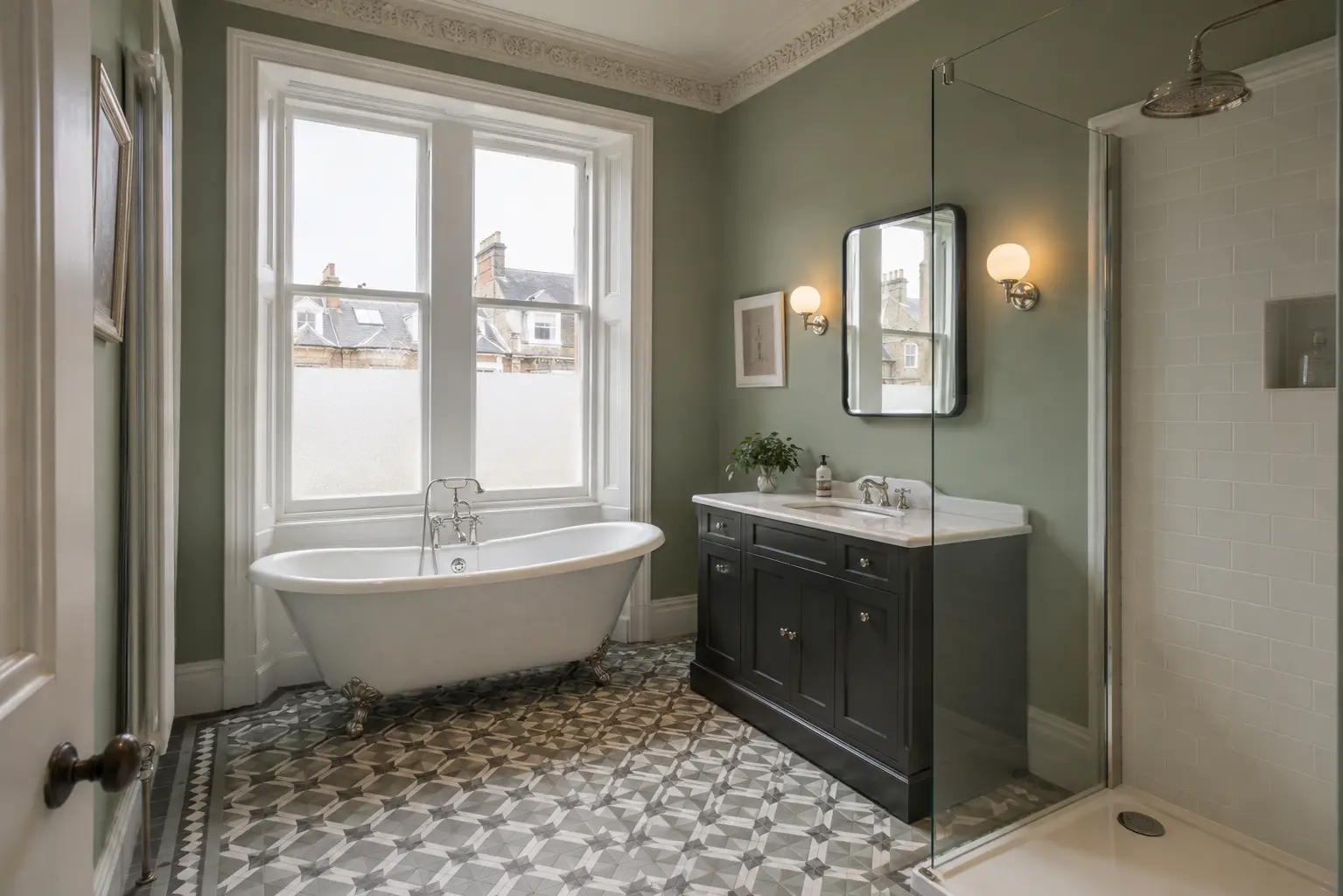
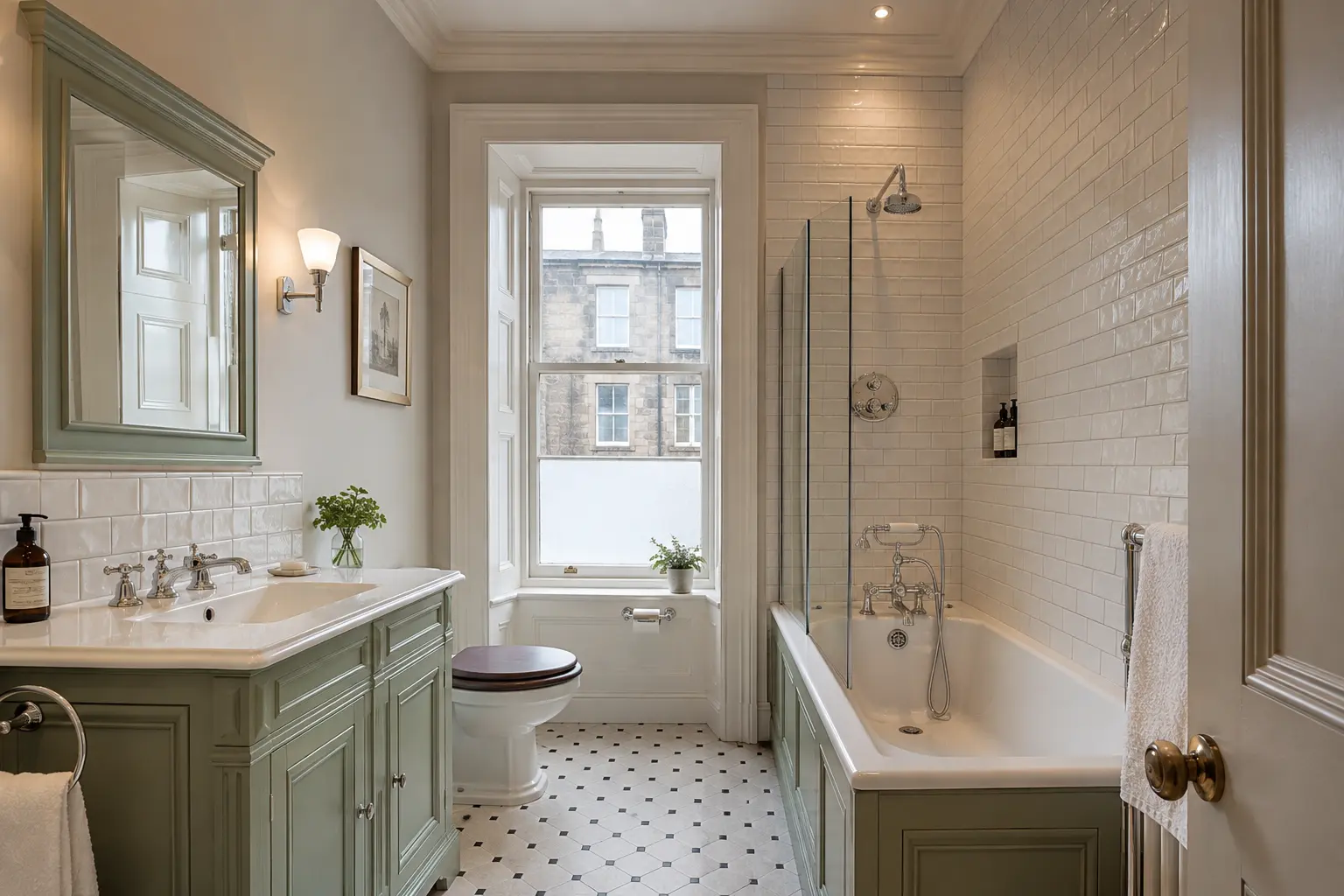
Traditional bathrooms may use panelled furniture, framed mirrors, classic taps and period-style baths. You do not need every one of those features to create the look. A fitted bath with a suitable panel can work just as well as a freestanding bath in a smaller room.
Check the practical details before choosing ornate fittings. Crosshead taps may be less comfortable for some people than lever controls. Decorative edges can take longer to clean. A period-style toilet may also have different dimensions from the one it replaces. Try the controls and check the product sizes rather than choosing entirely from a catalogue photograph.
Match the room without copying its age
A Glasgow tenement or older house does not have to contain an old-fashioned bathroom. A simple modern suite can sit comfortably beside a sash window or existing decorative trim. Equally, traditional furniture can work in a newer home if its size and finish suit the room.
Look at the features that will remain: window proportions, ceiling height, doors and any visible original details. Decide which to keep prominent and which new finishes will sit beside them. Avoid adding decorative features simply because the property is older. The room still needs a sensible shower, working ventilation and enough space to move around comfortably.
Compare cleaning and storage
Style does not remove the need for practical storage. Count the toiletries, towels and spare supplies you want in the room. A modern floating unit and a traditional floor-standing cabinet can both hold useful drawers, but their usable space depends on the exact design and pipework inside.
Think about cleaning around the bath, behind taps and beneath furniture. A freestanding bath needs room around it if you are to reach the floor. A frameless shower screen still needs its glass and seals cleaned. Choose features you are happy to look after rather than assuming that one style is always easier to maintain than the other.
Mix details when they work together
You can combine a traditional basin cabinet with a simple walk-in shower, or use classic floor tiles beneath a modern basin. Keeping a few colours or metal finishes consistent can help the fittings look good together. Compare the actual samples together, because products described with the same colour name may look different.
Avoid buying each item in isolation. Place the taps, handle finish, tile and cabinet samples beside one another before ordering. Consider the lighting as well: a finish that looks warm in a showroom may appear cooler in your bathroom. A small set of coordinated choices is often easier to live with than several competing statement pieces.
Let fitting needs and budget guide the final choice
The cost depends on the products and work, not just the style label. A modern concealed shower can need more preparation than a visible valve. A traditional bath can be straightforward to fit or require extra floor checks and awkward pipe routes. Ask for those differences to be explained in the quote.
Choose the layout first, then confirm the products, finishes and maintenance access. If the total is too high, keep the features you care about most and simplify less important details. The best result is a bathroom that suits your home and routine, whether you call it modern, traditional or a mixture of both. Keep the agreed choices in writing before fitting begins.
If the room is shared, ask each person to try the taps and think about the storage. A finish everyone likes is useful, but a control someone struggles to turn is a daily problem. Practical comfort should remain part of the final decision, whatever the chosen style.
For help with the work described here, see our small bathroom fitting in Glasgow.
What to remember
Choose a comfortable layout first, then coordinate the cabinet, tiles and taps.Bathroom fitters Glasgow
Get a quote for your Glasgow bathroom
Tell us what needs changing and add your postcode. We will contact you about the work.