
Check the supply before choosing the head
A rainfall shower can look attractive in a display, but the home’s water supply and the selected shower system determine how it performs. A large head does not create extra water. Before buying, ask an installer to check the exact model’s requirements against the supply available at the bathroom.
Keep the product information, including the valve and any additional handset, together. The head alone is only one part of the system. A catalogue photograph cannot tell you whether the combination will suit your home, and a description such as “high pressure” is not a substitute for checking the stated requirements.
Pressure and flow mean different things
Pressure describes the force pushing water through the system. Flow describes how much water is delivered over time. They are related, but a pressure figure alone does not tell you everything about the shower experience. Pipework, controls and the supply can all affect the water reaching the head while it is running.
Ask the installer to assess the supply under suitable operating conditions, rather than relying only on a reading with no water flowing. If the shower has several outlets, explain whether you hope to use them together. The system may have different requirements for one head and for an overhead head plus another outlet.
Identify the hot-water system
A mixer rainfall shower uses the home’s hot and cold water. The installer needs to understand how hot water is supplied and what the system can deliver. A stored-water arrangement and a combination boiler have different characteristics, so advice for one property may not apply to another.
Tell the installer about any existing problems, such as the shower changing when another tap opens. Do not fit a pump as a general cure without having its suitability checked. Some systems are unsuitable for particular pumps or need a different solution. The complete water system should guide the choice of equipment, rather than the shower head dictating unplanned alterations afterwards.
Compare the head size with the available water
A bigger rainfall head spreads water over a larger area. That may be the effect you enjoy, but it should be matched to the product’s intended supply. A smaller suitable head can sometimes give a more satisfying result than a large one chosen purely for appearance.
If possible, compare working displays while remembering that the showroom supply may differ from yours. Ask what performance the installer expects from the specific model in your bathroom. Check whether the manufacturer offers a suitable alternative for your system. Avoid changing the head on an electric shower unless the manufacturer confirms the replacement is appropriate for that unit.
Plan the position and height
An overhead shower needs enough room above the user and a sensible position within the tray or wet area. Ceiling height, sloping roofs and the length of the shower arm all affect the result. The head should not force you to stand against a screen or aim water towards an open entrance.
Think about how you will turn it on without standing beneath the first cold water. A separate handset may be useful for rinsing and cleaning, but it adds another part to choose and connect. Agree the outlet positions and controls before walls are finished, and confirm which combinations can operate at the same time.
Keep cleaning and servicing practical
Shower heads need routine care according to their instructions. A large fixed head can be harder to reach than a handset on a rail. Think about how you will clean its nozzles and surface safely without standing on the bath edge or another unsuitable support.
The valve and other concealed parts also need service access. Ask how a cartridge or connection can be reached later. Keep the model numbers and product documents with the bathroom paperwork. Choosing an accessible repair arrangement during fitting can avoid unnecessary damage to finished tiles or panels if a part eventually needs attention.
Compare the full cost before committing
Ask for the price of the head, valve, controls and any required supply changes. Include work to walls, ceilings or pipes, rather than comparing only the visible shower fittings. If the chosen system needs substantial alterations, request a simpler alternative that works with the existing supply and compare the two clearly.
At handover, have the shower demonstrated and check each control. Ask what ordinary maintenance is expected and who to contact if performance changes. A rainfall shower should be chosen as a working system for your room, not as a large decorative head that disappoints once connected. The checks before ordering are what make that difference.
If the existing shower has gradually lost performance, have it checked before planning a larger replacement. Wear, a restricted head or another supply issue may need attention first. Describe whether the change affects only the shower or other outlets too, without opening equipment yourself. The installer can use that information to decide which checks are useful and whether a new head would address the problem.
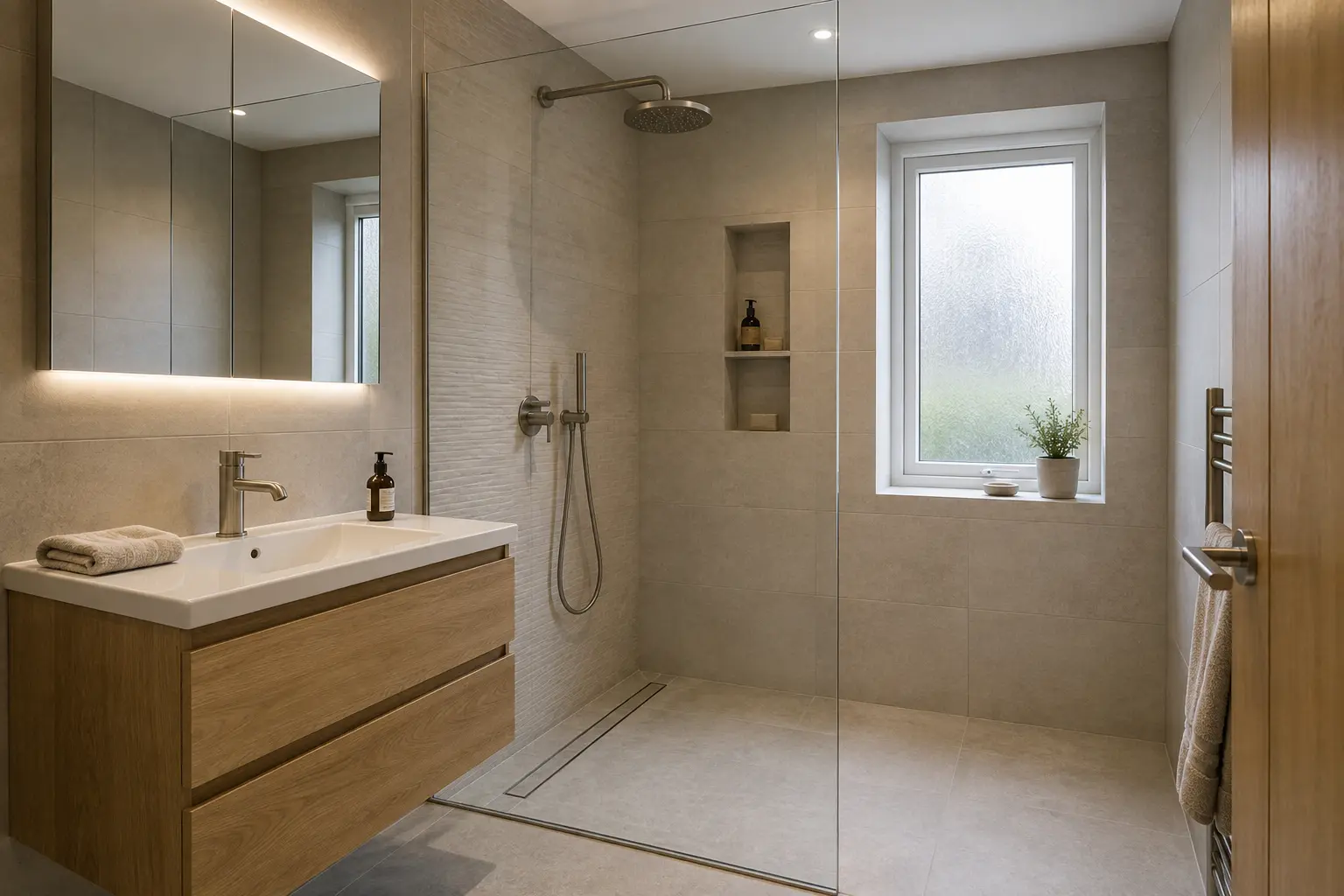

For help with the work described here, see our walk-in shower fitting in Glasgow.
What to remember
Have the installer check the complete shower system before ordering.Bathroom fitters Glasgow
Get a quote for your Glasgow bathroom
Tell us what needs changing and add your postcode. We will contact you about the work.